Reading, 4

Next up is a book I’ve been wanting to read for about 20 years. When it was first published, the title grabbed me … Matthew Flinders’ Cat. I already knew that Flinders had a cat he’d named Trim, and had seen the bronze statue of Trim at the State Library of New South Wales.

I didn’t research the story beforehand as nowadays I usually do, just looked forward to reading a blow-by-blow account of Matthew Flinders’ voyage mapping the coastlines of what was then New Holland, accompanied by his cat.

Usually I wait until a book comes out in paperback before buying it, so when I didn’t see it appear in the local bookshop a year later, forgot about it. Since then I’ve seen it a few times in libraries without there ever being an opportunity to borrow it, and a couple of weeks ago saw it on one of the two bookshops I now frequent.

And so bought it. Because I needed a new, chewy read, and for the expectations I just described, but still not knowing anything about it apart from the fact that Trim might be one of the main characters.

Book 10. Matthew Flinders’ Cat by Bryce Courtenay, this edition published in 2006 by the Penguin group.

How did I miss that it was written by Bryce Courtenay? I’ve read a few of his but generally don’t like his style. To me they’re the kind of book I might read if there is nothing else available.

Such as when stuck in a camping ground by the roads being flooded and Bryce Courtenay book is the only thing to be found in the camp laundry. That’s where I found The Potato Factory and read that. But that’s by the by.

Reading the first paragraph of this book I knew it wasn’t going to come to my expectations but, I reminded myself, that was my own fault. And since I had given out good money for it, I would read it.

‘Billy O’Shannessy woke to the raucous laughter of two kookaburras seated on top of adjacent telegraph poles.’

There is Billy O’Shannessy … Courtenay does this thing that I was taught as a new fiction writer, make the first two words about the the main character. In that same first sentence there is also setting the scene, in this case the Australian scenario with the two kookaburras. And there is the modernity of telegraph poles, if a slightly old-fashioned term for them telling us the story is set in the present. Telegraph poles might’ve been normal for 2002, when the book was first published. I don’t remember. The rest of the paragraph tells of his hangover and that the birds served as his ‘regular alarm clock’.

In the next paragraph I learned he was lying on a park bench with a canopy of leaves over him. It’s only on the third page that Trim gets a mention and then only his life-sized bronze statue on a window ledge of the state library

By en:User:PanBK – http://en.wikipedia.org/wiki/Image:Trim-the-illustrous.jpg, CC BY-SA 3.0, https://commons.wikimedia.org/w/index.php?curid=1182097

The Wikipedia page about Trim is interesting. He’s got several more statues, one in Donington, UK and one in Port Lincoln, South Australia, as well as a glowing epitaph by Matthew Flinders himself.

Alas, this book is not primarily about Trim, or even Matthew Flinders.

Purporting to be a novel, it seems to me to be written as a tribute to the Salvation Army, the Twelve Step Program to recover from drugs and alcohol abuse and rehab, and the many services helping homeless people and troubled children in Kings Cross, Sydney. All very worthwhile people and services, I’m not denying that.

Published two years after Courtenay’s divorce, I did wonder whether he was writing a semi-autobiographical novel, that he was a recovering alcoholic. The fact that it is his twelfth novel might explain why an editor would do less editing, leaving unchanged the info dumps, for example, consisting of half or three-quarter pages describing people and places.

But I’ve often wondered how people go about writing a tribute novel so in that respect this was an interesting read. First, he had a professional researcher … the results of research are big in this novel. There are screeds of explanations. Over pages 333-334 there’s a paragraph of over 200 words. That’s almost a whole page. Commonly called a wall of text. It seems very 19th century-ish.

In places it feels like Courtenay inserted a whole paragraph straight from the source. That can’t be right, of course. Courtenay was a well-respected author. I like to think there would’ve been at least one rewrite to make the material his own.

In addition, most professional people wouldn’t hesitate when approached by a famous author to tell them about their world, any extra mention is going to help promote their concerns, right? That also shows in the detail about organizations such as the Salvation Army. I imagine there’s a fine line between wanting to do one’s sources justice and keeping the story from dragging the weight of excess information.

The bits about Trim were the story Billy O’Shannessy told Ryan, the ten-year-old other main character. Trim is imagined in the talking-animal style with a lot of agency. Which left me wondering whether the adventures described had any truth in them. They read like fantasy.
Probably I’ll try to find something nearer to Matthew Flinders’ own account of his and Trim’s circumnavigation of Australia.

Wikipedia …

My favorite go-to for information … you name it, it provides … plus images not encumbered with watermarks and dollar chewing subscriptions. I do donate to help them keep going.

Wikipedia is 25 years old this year, three cheers …

I intended to reblog Hotchkiss’s blog but am on my mobile and don’t know where it went … in the ether somewhere

Mongrel, 36

I’m pretty happy with this image, another cut from a ceramic puzzle I once made. The original 30 centimeter tile broke across during storage, a risk associated with green-ware. IE not yet kilned. I took the pieces home over the Christmas holidays to decide what I was going to do with it.

Ended up breaking them into 13 pieces to try a different experiment on each piece. In this photo are four of the pieces representing a creek. As well as incising them, and painting them with ceramic slips, I searched one of the local bottle dumps and found fragments of old blue and old white glass to crush. Kilning the glassy fragments made the foamy creek water featured on these pieces. Below them the pieces that were inscribed with creek bank vegetation and fungi.

Reading, 3

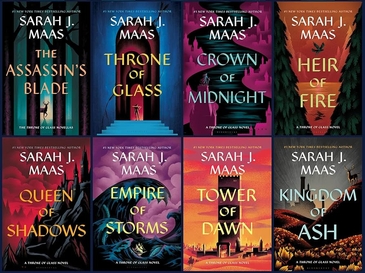
The third post of this series already though I haven’t settled into a routine yet. Today had the better idea of what to do about the illustration. Instead of letting just one book have all the glory, why not give them all a chance to attract readers? Will give that a go shortly.

The longer without a routine the better, I used to think before I was pole-axed by ME/CFS. Come Easter, I’ll have lived with this malady for 29 years. Somewhere along the line I learned that making decisions is a stressor that saps my strength.

The idea out there—in the public domain—is that the more non-important decisions we encapsulate in routines the more energy we’ll have to make important decisions. It’s not wrong … routines enable me. Interesting article on decision-making … https://en.wikipedia.org/wiki/Decision-making

Then I thought what about at the end of the year? Won’t I want to know how many books I actually read? That is the project after all. I saw myself counting through the posts. Got to be an easier way. Just number them already. So … started that today.

Book 5. The Light Pirate by Lily Brooks-Dalton, 2022. Published by Grand Central Publishing of New York.

This is the only book out of the five that I’ll recommend. I might’ve mentioned before on this blog that the climate change apocalypse, and its associated nightmare horsemen are my Sword of Damocles, and that the thread the sword is hanging by is wearing mighty thin and frayed.

The Light Pirate is set in the near-future and describes how the Florida coast is being engulfed the sea. It’s a blow-by-blow account of the way one family dies and adapts and is taken and finally evolves for a new existence. Ninety percent stark dark reality and ten percent luminous hope.

This is a book I would like to own. Read the good bits every now and then. This story speaks for everywhere there is low ground by the sea.

Book 6. Downward to the Earth by Robert Silverberg, 1969. First serialized in Galaxy Magazine it was published in 2015 by Gollancz in their SF Masterworks.

Although I’ve been reading science fiction since I was about 13, and Robert Silverberg has written hundreds of stories, I haven’t read all that many. Scanning through the titles in the front, I see only one that I own. Most don’t ring a bell. This little classic is said to … “blend mysticism, worldbuilding and literary references in an inventive mix …” from the backcover.

It’s probably about 60 thousand words, a common size in the 1970s, with a single storyline, the journey of the main character, Gundersen, returning to the planet after a ten year absence, out of guilt and needing to do penance for his mistreatment of the native species.

When I read old science fiction I’m forever fielding echoes. In this book I was reminded of some of Oscar Scott Card’s work. Comparing the dates of Silverberg’s and Card’s work, I think probably Card got his idea of the melding of the two species from Silverberg. Although, they could both have got the idea from Earth’s own panoply of creatures. Most insects, for example, have vastly different life-stages.

    Book 7. Iron in the Soul by Jean-Paul Satre, 1949. This edition translated by Gerald Hopkins and published by Penguin Classics, 2002.

    Despite that there was plenty of Jean-Paul Satre around when I was a young student, I was never tempted to read him then. Now I thought, browsing along the shelves at Carindale Library, why would Penguin choose to republish him as one of their classics if there wasn’t something to him?

    I read a few pages in the middle—that’s the way I test books for readability—and thought it might be interesting. A whole other viewpoint about the Second World War, this one from the POV of the rank and file of the French Army.
    Thousands were taken to Germany and, I read just now, more than ten thousand French soldiers fought alongside the Germans. I wonder if they were given a choice, fight for us or we shove you in a work camp? https://en.wikipedia.org/wiki/France_during_World_War_II

      Book 8. Wolf Girl: Into the Wild by Anh Do, 2019 with illustrations by Jeremy Ley, 2019. Published by Allen & Unwin.

      Seriously, was a bit of light relief, I zipped through this in about an hour. A story aimed at 8-10 year olds that my grandson lent me. I was interested to read how Anh Do, serious artist, translates into Anh Do, children’s author. His style reminds me of Enid Blyton’s.

      There are about a dozen installments. A money-spinner, if you ask me. And yet, Enid Blyton’s vast output was great for struggling readers, giving them lots and lots of practice of the plain vocabulary that they needed to become good readers. So perhaps this is the place for Anh Do’s output in Australia.

        Book 9. The Woods by Harlan Coben, 2007. Published by Orion Books.

        Returning a bunch of books to the in-house library in the community center, I picked up The Woods because Coben wrote it and I hadn’t read it yet. Pure indulgence. A fast forgettable read. Suspense? Of course. All the t’s crossed and the dots dotted? Yes. “The modern master of hook and twist,” says Dan Brown on the front cover. (Wonder what he got or did to get his name on someone else’s front cover?)

          Mongrel, 35

          The so-called Australian Meat Pie … a traditional savory delicacy if you can eat gluten and beef … that nowadays comes in many different flavors, of meat as well as sweets. traditionally eaten out of the hand, not from a plate with a knife and fork. Although pubs do plate them and serve them with mashed potatoes, peas and gravy. Not in the case of Jay Jason though, he’ll bag them.

          By Finbar.concaig – Own work, CC BY-SA 4.0, https://commons.wikimedia.org/w/index.php?curid=93219006

          Reading, 2

          The project continues.

          Next up was Chasm City by Alistair Reynolds, published in 2001. “A hardboiled pursuit/revenge thriller set in the RS universe,” from the author’s website. RS = Revelation Space, which I don’t know anything about other than what I’ve just read. Thriller? Nah.

          An eight-day read, worked at diligently. Dense and detail rich. According to my research after reading it, this is Reynolds’ second published novel. And also second in reading order, it’s a ‘stand-alone’ as the Reddit experts tell it, but which surprised me as there seemed quite a bit of bloat. Stuff, that for the sake of the pace, readers could’ve done without. Stuff that I wanted to skim, but ended up plodding through because of not knowing what was essential to the plot.
          There goes my theory that editors don’t look as closely at authors with a lot of books already published.

          At times I thought I was reading about Mars. I think it was a case of stories bleeding into one another due to proximity. In this case, me watching The Expanse Series by James S A Corey on television. I think probably due to the sheer size of the chasm. Very Martian. Though in this case, it’s a planet called Yellowstone and a large part of the chasm is domed over.

          Life in the chasm is very interesting, regional. As can be expected the upper classes live in the Canopy, the slums are in the Compost. Travel is by semi sentient vehicles that claw their way up and down and along hanging vegetation and cables. The slum dwellers are all about making a living. The rich play at turkey shoots, where they free a prisoner and force them to run for their lives.

          The two main characters, with at first separate stories, eventually seem to meld into one another. The POV character keeps changing identities, and is as slippery as an eel to keep hold of. I found that quite disconcerting as the story is complex and I found it easy to get lost in. I did a lot of re-reading.

          Why didn’t this turn into a DNF read? (Did Not Finish for those of us at war with acronyms). It could’ve, to be honest. But Reynolds also wrote the Revenger trilogy… Revenger, Shadow Captain, and Bone Silence. Three of my favorite modern science fiction reads.

          Fantastic worldbuilding, great characters, piracy and treasure hunting, a gripping plot, a steampunk flavor. Rave, rave, rave.

          Reading Chasm City I kept wanting to give Reynolds more time to come good, to tell the story with as much verve and vitality he’d shown in Revenger. I think now, knowing the Chasm City was only his second novel, that he was still learning.