I’m pretty amazed at finding this image … these are exactly the sort of thing I imagined for the buggy’s attachments to the cables.
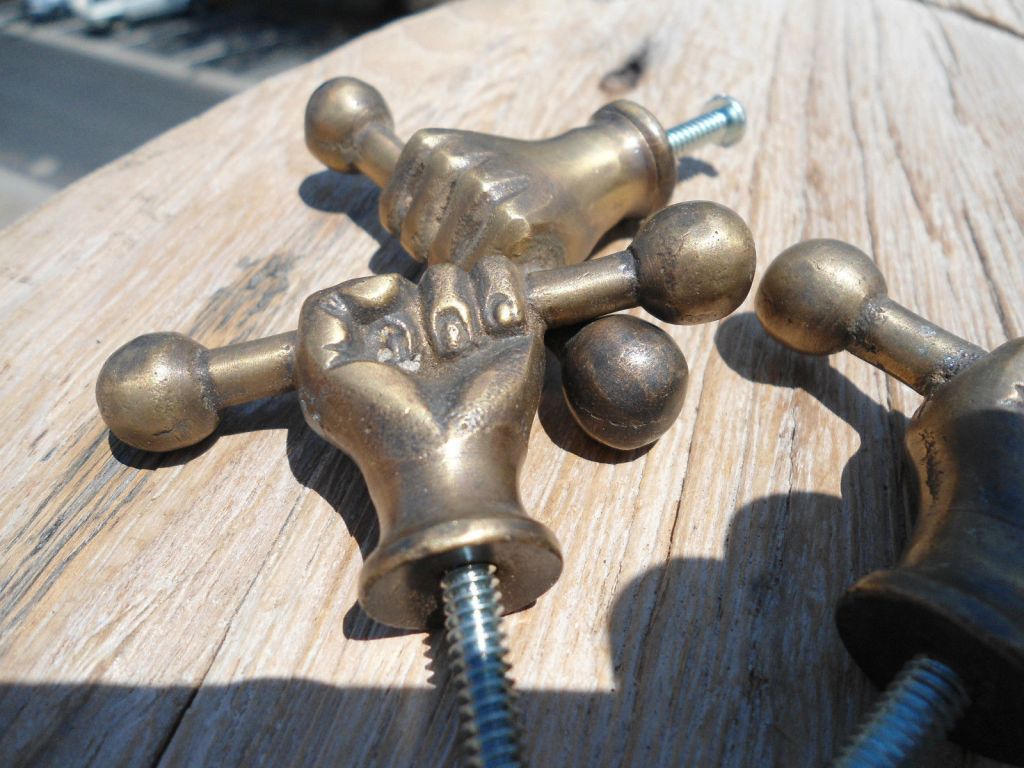
I’m pretty amazed at finding this image … these are exactly the sort of thing I imagined for the buggy’s attachments to the cables.
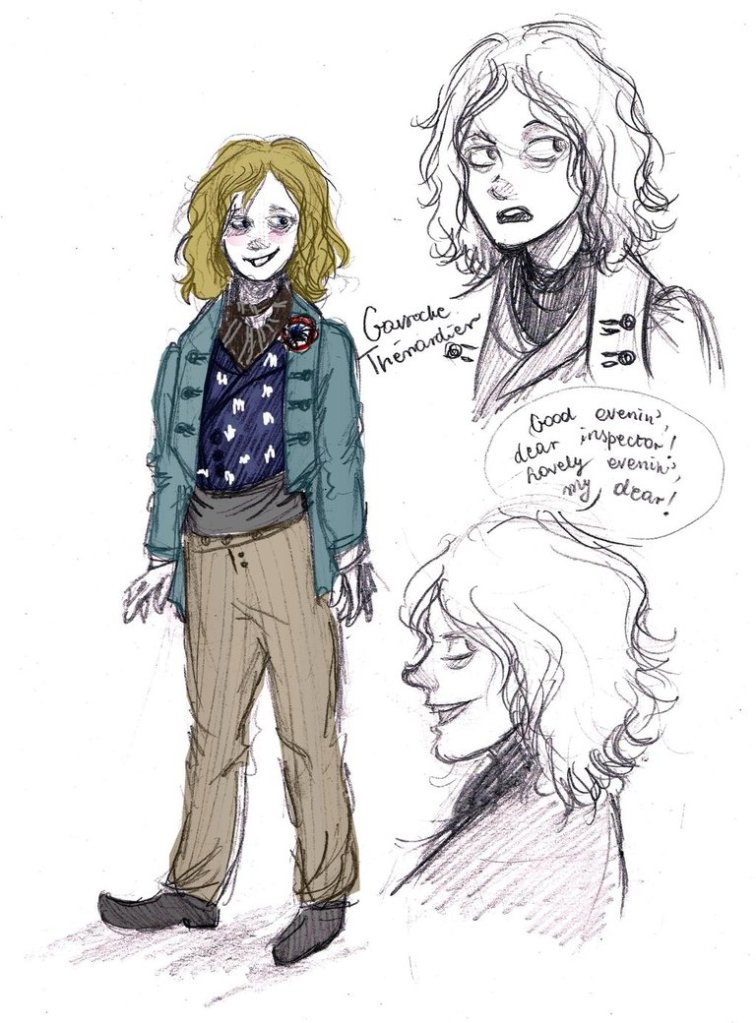
An image that I sourced from Deviant Art about five years ago. I don’t remember any more how I got it. Whether I downloaded it, for example. street_urchin_by_xxignisxx-d66m7xi
Lol, I should be writing Part 17 by now. I knew when I started this project I’d have a hard time keeping up with the Reports. And, the longer I leave the reports, the harder it becomes remembering what I thought about the books. Well, here goes.
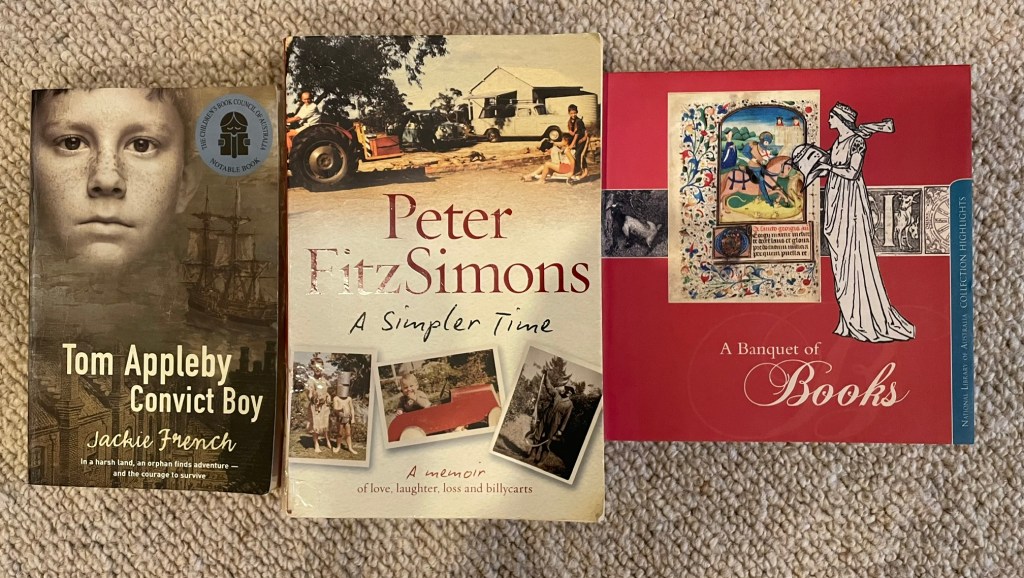
Book 48 … Tom Appleby, Convict Boy, by Jackie French, published in 2004 by Angus & Robertson, an imprint of Harper Collins Publishers.
When I read a book aimed at young readers, I’m often in the mode where I’m reading aloud. Asking myself whether it ‘sounds’ like an interesting read for both the adult reader and the young listener. And Tom Appleby sounds pretty good to my inner ear so I will be able to recommend it.
Although the main character starts off being only eight years old, his life will be so foreign to modern children being read to, there’s no flavor of childishness. And once the ships reach Port Jackson, Tom grows up a bit. He has to, in a community where hunger is the primary concern, and stealing food is not an option for him.
Tom is chosen by a sergeant in the marines for company for the sergeant’s son. The boys learn the skills necessary to survive together.
Though I’m not sure about the fact that they meet an old aboriginal lady who shows and teaches them native foods. Not sure how that would strike a modern Indigenous reader/listener.
Thirty years ago, Jackie French was a favorite source for read-aloud books. Seems like she could do with a revival. And the book has indeed passed on to its next home–the-adult-reader-and-young-listener combo.
Book 49 … A Simpler Time: a memoir of love, laughter, loss and billycarts, by Peter FitzSimons, published in 2010 by Harper Collins Publishers.
I’m glad FitzSimons called his book a memoir himself, saves me have to ponder once again about the differences between autobiography and memoir.
I saved this book from the dumpster because it’s set in the late 1950s and 1960s, and because the kids in it grew up at Peats Ridge, only about 39 kilometres by road and shorter as crows would fly from the suburb where my sisters and brothers and I were growing up in those exact years.
There’s even a possibility we might have met them at one or other time as we all would’ve traveled the same train services. Maybe in the school holidays or once we all graduated from our various high schools.
There were plenty of interesting comparisons and likenesses. The FitzSimon kids lived on a two-hundred-acre farm, where their parents had settled after WW2, to grow oranges, tomatoes and zucchinis. A seven days a week job.
We de Heer kids lived on a half-acre block carved out of the same kind of sandstone that supported Peats Ridge, covered with the same kind of bush that vegetated Peats Ridge. The de Heer father, also being a seven days a week man, chose to build our house himself on weekends, and after he got home from 12 hour days getting-there, working, and-getting-back.
There were five of them, there were six of us. The FitzSimons kids were boarders at Knox Grammar for Boys and Abbotsleigh Girls High. Both of them ‘flash’ private schools in the understanding of newbie immigrant kids like us. We went to state day schools like Asquith Girls High School and Asquith Boys High School, though one of my brothers managed to get a scholarship to attend James Ruse High School at Carlingford.
Our state primary schools, theirs and ours, would’ve been run by the same state education department, though theirs was a country school with only two classrooms and ours may have had 4 classrooms by then.
Peats Ridge. As soon as I picked up the book, it was like I recognized it and had to read it. Thoroughly enjoyed it and will send it to one of my youngest siblings for him to read.
Book 50 … A Banquet of Books: A Collection of Highlights, published in 2007 by the National Library of Australia.
I hardly know where I got this book. Must’ve been in the collection of secondhand books I saved from the dumpster. A job lot as they say. But an interesting little book, and about books you’d never ordinarily would see, hidden as they are among the collections or in the National Library’s acreage of store rooms.
After a brief intro, it is divided into three sections: Homegrown Historical Treasures; Masterpieces from Abroad; and Works of Art.
The introduction starts with one of the smallest books in the world—so small in fact that I don’t see how it could’ve been made—measuring 2.1 mm by 2.4 mm made in Germany in 2002. The largest book in the collection also gets a mention … Birds of America by James Audubon, 1785-1851. It’s a double elephant folio.
Part one’s Homegrown Historical Treasures includes a catalogue of fabrics (bark cloth or tapa) collected during the three voyages of Captain Cook. Part two, Masterpieces from Abroad, has a Book of Hours, and a leaf from the Gutenberg Bible and about fifteen more. Part three, Works of Art, contains Lionel Lindsay’s Twenty-One Woodcuts and Ann Muir’s Harvesting of Colour, from the 1990s, among a couple of dozen of historical maps, biographies, paintings by Gould, John Lewin, and other artists. I was amazed at the treasures the National Library has hidden away in its collections. Well worth visiting.
Book 51 … The Black Book by Ian Rankin, first published by Orion Books in 1993. This edition published in 1994 in the UK, but then printed in Australia in 2005 as far as I can make out.
I returned this to the library only yesterday and all I recall of it is that it’s the fifth in the Inspector Rebus series. Here a few more details by Wikipedia.
“The Black Book is a 1993 crime novel by Ian Rankin, [1][2] It is the first book to feature Siobhan Clarke, and the first one in which Morris Gerald Cafferty appears as a main character. It is also the first book in which Rebus is based at St Leonards police station.”
Neither awful nor fantastic, it delivered me a few hours of uninterrupted relaxation/reading when the stress of the previous couple of days meant my delayed fatigue forced me to rest up.

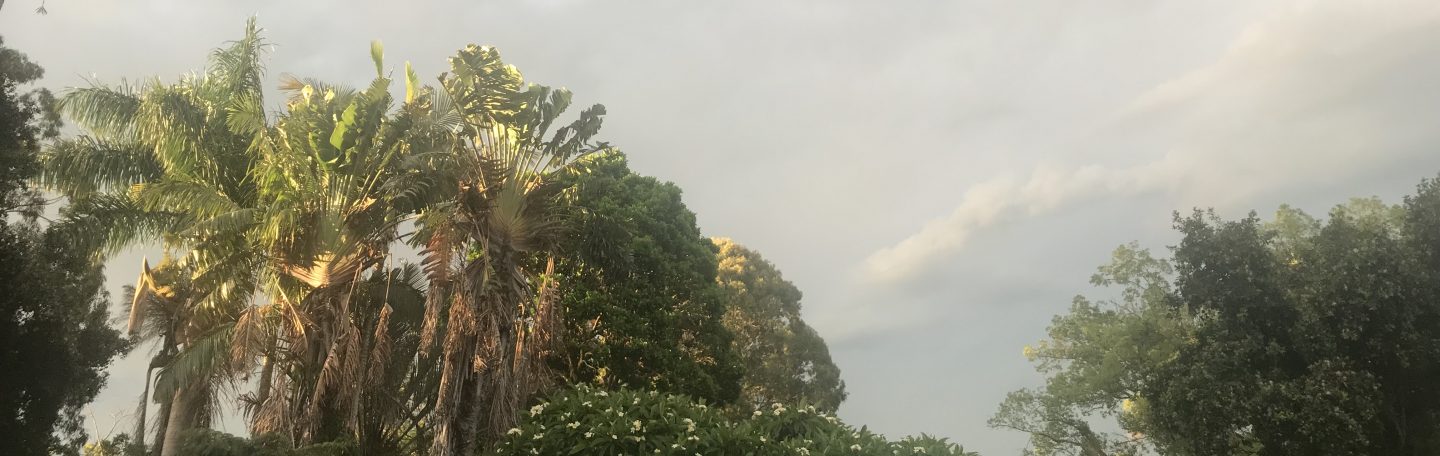
This is a screenshot, possibly from a photo by Paul Smith of an amazing-looking unnatural-looking sky. Correct me if I’m wrong. Anyone?
Finally signed up to a newspaper and even paying my way. The Guardian has Tim Winton writing on account of the ‘outrage’ of climate warming being done to us, and mincing no words at all. I’m happy to read the real story!
So I’m glad that the Volkskrant, the Dutch outlet I was trying to subscribe to, just didn’t want to know me. Their site is run totally by machine. Without any human input, it feels like, and if the prospective subscriber asks something different to the usual, there is just no possibility to step off the beaten track.
And finally, there’s nowhere to put my Australian money since I don’t have an IBAN, don’t know what an IBAN is, and moreover my bank in Australia does not deal in IBANs. Up to now I have had no problem paying anywhere in the world by the usual international means. Must be, the Volkskrant wants only want sheeple.
From the few bits that I did read, I gather that Dutch–or should I say Nederlands–is being Anglified hand-over-fist. I saw a ton of words taken straight out of English that, where and if necessary, had Dutch pre and post fixes, and verb endings applied. Gescoort? Offeren. Privacy. Spark.
Other than that tendency, there is the Dutch practice of pasting long trains of words together to describe new concepts … onderhandelingstafel, for example, in an article to do with trade sanctions. Don’t ask, I have no idea. Vermogensbeheerder is another mysterious concept.
Is this merely a Dutch version of journalese is what I want to know? Do ordinary Dutch people speak this language?
The equivalent but opposite tendency in English seems to be to split up compound words and I admit to a tendency to put hyphens between words that read as though they are trying to belong together. Like hand-over-fist a few lines above.
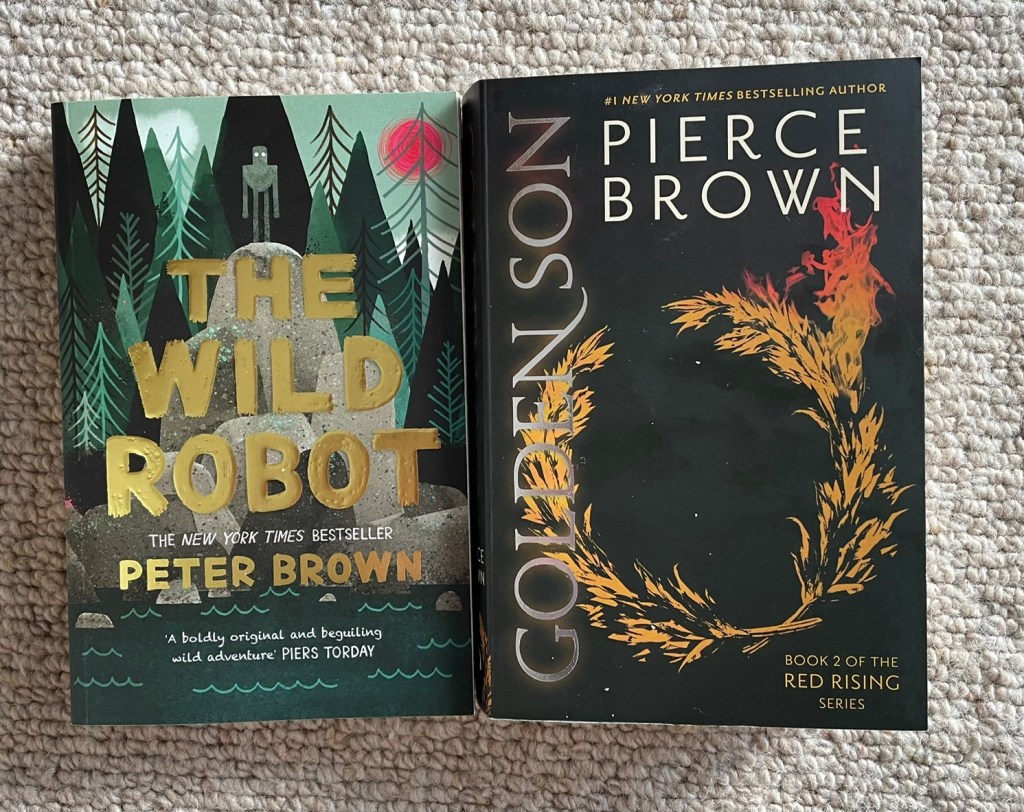
Just two of the books I read, the others I have already passed on.
After I reading the two navigator-explorers, Captains Cook and Flinders, I was ready for a bit of fiction. My SF reading buddy and I had been saying for a while that we needed a new series to get our teeth into, and couldn’t find one. With more time on my hands than he has I sourced a few 10 Best XYZ lists. Noted two or three series that all appeared on several lists.
One fine Saturday when I was grocery shopping, and then intending to look for a birthday book suitable for a nine-year-old, saw a 50% Fantasy and Science Fiction Sale at QBD (referring to Queensland Book Depot, I’m assuming).
Lol, what QBD apparently did, was mark down to 50% all first parts of series, leaving the rest of the series at the normal price. So I walked out with the book gift and three first installments of their respective series each of those between 10 and 12 dollars. How can they even produce books that cheap? Our idea being that which ever of the first installments catches our interest, we’ll continue with.
Book 44 … Mistborn, Book One of the Mistborn Series, by Brandon Sanderson, this edition published by Gollancz in 2009.
Mistborn was the first one I picked up to read. I’ve read somewhere it’s being turned into a feature film and thought I should read it before I see it as films rarely improve on books.
I find Sanderson tooth-grittingly hard to read. In my middle life I spent ten years editing undergraduate essays, an experience that has left me deeply disinterested in reading poorly phrased prose and Sanderson loves “thin alleys”!
What’s wrong with narrow alleys? And that’s just one example. I can’t believe Mistborn is being touted as literature!
Seems that I’m not alone in this, I was happy to discover. When I am alone in a complaint, there’s always the suspicion that I’m being elitist, or fussy, or or or … This time though, several Reddit commentators are of the same mind. Although one of them thought that Sanderson writes ‘flat prose’ purposely, to attract the largest possible following. In answer to that I say that George R R Martin, among others, didn’t have to resort to flattening his prose to attract a large following.
But flat prose aside, Sanderson’s ideas and inventions are fresh and capable of sending their stories into new unusual directions. Though this is not enough for me to want to read part two or more.
Book 45 … Red Rising, by Pierce Brown, first published in 2014 by Del Rey, an imprint of Random House.
Pierce Brown is one of the ‘many others’ I mentioned up there. No ‘flat prose’ in sight. This is one of those books where I hardly noticed I was reading. Some Reddit commentators have mentioned the many many short sentences and how they distract from a good read.
Others say short sentences are what makes audio books an intense listen. Oh, I thought. Audio. That’s why the short sentence style is taking over public writing. And plus, AIs seem to like it.
Red Rising read like a breath of fresh air to me, I never had to wonder what the author meant. Yes, it was a gallop. The worldbuilding, a society organized by colors and partly structured by a Roman underlay, go hand-in-hand with the plotting, and are frenetic.
Though it’s true that Darrow, the main character, is a bit of a superman, and always comes out on top despite his sometimes mistaken beliefs in the goodness of others. But never mind. I’ve read that this is the weakest of the series. If I can trust the commentators, things can only look up.
Book 46 … The Wild Robot, by Peter Brown, first published in 2016 by Little, Brown and Company, an imprint of Hachette.
The Wild Robot is the birthday book. A film is already out there and I think I’ve seen it. Which probably helped me choose the book. This is the story of a robot becoming marooned on a deserted island, and learning to live with nature, or part of nature. It seems a little moralistic but was the best that I could find without reading everything. Lol.
I despise books written purposely to teach kids morals. As if they aren’t learning them from their parents. Kids famously learn their morals by watching how their parents behave and behaving just like that. Teaching kids morals is like teaching fish to swim.
It’s increasingly hard to gloss a bookshop’s shelves for good kids’ books. It seems to me the golden age of children’s literature has gone the way of many other good things. I think Rosemary Sutcliffe’s books could do with reprinting. Penguin Books? Anyone?
I have quite a few of the really good middle grade fictions on my shelves still (some of which are forty plus years old, I confess) and although some of them are being reprinted—The Little House Series and The Rats of NIMH, for example—many others have just disappeared.
In the past, kids read about animals and their lives. Historical fictions. None of them around now. Too many good film documentaries, I suppose.
Book 47 … Golden Son, by Pierce Brown, first published in 2015 by Del Rey, an imprint of Random House.
Lol, this is not one of the three firsts that I bought. I couldn’t resist going in and buying Part 2 of the Red Rising Series. I guess I’m hooked.
However, it’s been a couple of weeks since I read Golden Son and a lot of Real Life, eg a light fling with Covid, has happened in the meantime. I will have to read Darrow’s doings again for the detail as I now remember very little as I raced through chasing the plot. A bad habit. The plot is intricate, detailed, a lot happens, there’s non-stop action.
At the end, I do remember thinking, with all that happened, and all the mysteries that have been outed, what is there left to say? How can there be all the subsequent installments? Is he going back to the beginning and start a whole lot of new threads? Re-inventing himself, no doubt.
Well, I just read a couple of articles on Wikipedia. Apparently Golden Son is the second installment of a trilogy. After Morning Star, the third one, there will be a second trilogy to make up the six books in the series so far.
I’m not sure whether I have enough puff to read any more in this arena after Golden Son. I enjoyed the two that I read, but it sounds like the next four are more of the same. And I’m pretty sure Darrow will win, somehow.