
Tag: science fantasy
Reading Project, 14
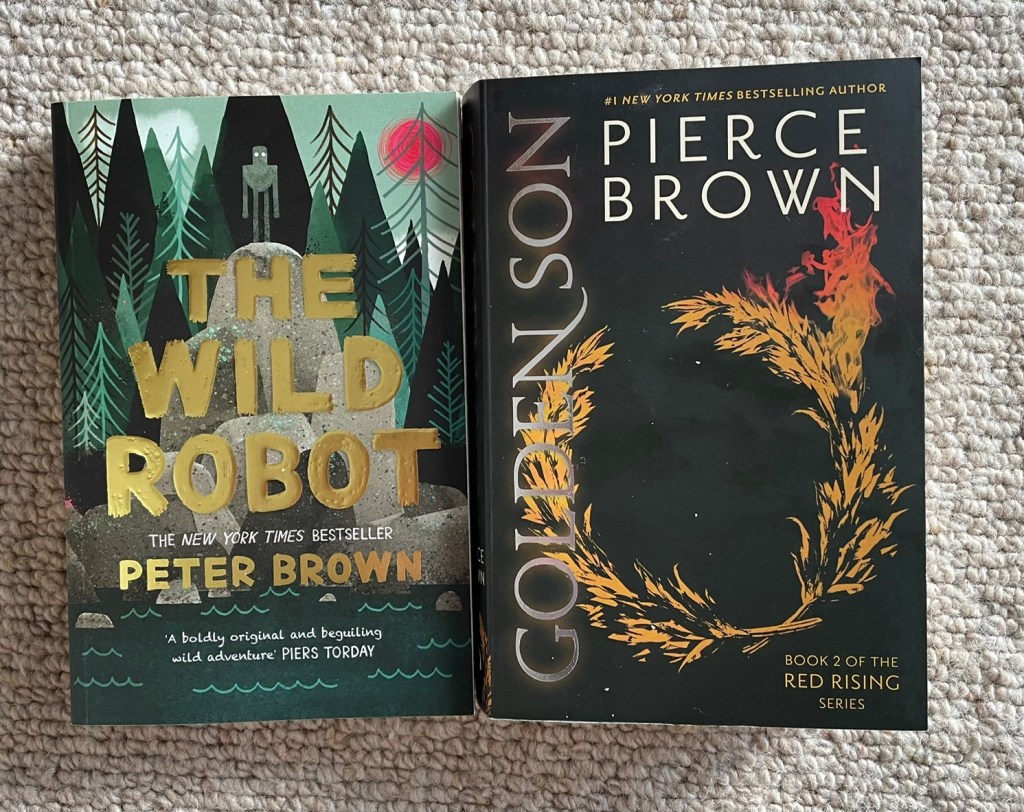
Just two of the books I read, the others I have already passed on.
After I reading the two navigator-explorers, Captains Cook and Flinders, I was ready for a bit of fiction. My SF reading buddy and I had been saying for a while that we needed a new series to get our teeth into, and couldn’t find one. With more time on my hands than he has I sourced a few 10 Best XYZ lists. Noted two or three series that all appeared on several lists.
One fine Saturday when I was grocery shopping, and then intending to look for a birthday book suitable for a nine-year-old, saw a 50% Fantasy and Science Fiction Sale at QBD (referring to Queensland Book Depot, I’m assuming).
Lol, what QBD apparently did, was mark down to 50% all first parts of series, leaving the rest of the series at the normal price. So I walked out with the book gift and three first installments of their respective series each of those between 10 and 12 dollars. How can they even produce books that cheap? Our idea being that which ever of the first installments catches our interest, we’ll continue with.
Book 44 … Mistborn, Book One of the Mistborn Series, by Brandon Sanderson, this edition published by Gollancz in 2009.
Mistborn was the first one I picked up to read. I’ve read somewhere it’s being turned into a feature film and thought I should read it before I see it as films rarely improve on books.
I find Sanderson tooth-grittingly hard to read. In my middle life I spent ten years editing undergraduate essays, an experience that has left me deeply disinterested in reading poorly phrased prose and Sanderson loves “thin alleys”!
What’s wrong with narrow alleys? And that’s just one example. I can’t believe Mistborn is being touted as literature!
Seems that I’m not alone in this, I was happy to discover. When I am alone in a complaint, there’s always the suspicion that I’m being elitist, or fussy, or or or … This time though, several Reddit commentators are of the same mind. Although one of them thought that Sanderson writes ‘flat prose’ purposely, to attract the largest possible following. In answer to that I say that George R R Martin, among others, didn’t have to resort to flattening his prose to attract a large following.
But flat prose aside, Sanderson’s ideas and inventions are fresh and capable of sending their stories into new unusual directions. Though this is not enough for me to want to read part two or more.
Book 45 … Red Rising, by Pierce Brown, first published in 2014 by Del Rey, an imprint of Random House.
Pierce Brown is one of the ‘many others’ I mentioned up there. No ‘flat prose’ in sight. This is one of those books where I hardly noticed I was reading. Some Reddit commentators have mentioned the many many short sentences and how they distract from a good read.
Others say short sentences are what makes audio books an intense listen. Oh, I thought. Audio. That’s why the short sentence style is taking over public writing. And plus, AIs seem to like it.
Red Rising read like a breath of fresh air to me, I never had to wonder what the author meant. Yes, it was a gallop. The worldbuilding, a society organized by colors and partly structured by a Roman underlay, go hand-in-hand with the plotting, and are frenetic.
Though it’s true that Darrow, the main character, is a bit of a superman, and always comes out on top despite his sometimes mistaken beliefs in the goodness of others. But never mind. I’ve read that this is the weakest of the series. If I can trust the commentators, things can only look up.
Book 46 … The Wild Robot, by Peter Brown, first published in 2016 by Little, Brown and Company, an imprint of Hachette.
The Wild Robot is the birthday book. A film is already out there and I think I’ve seen it. Which probably helped me choose the book. This is the story of a robot becoming marooned on a deserted island, and learning to live with nature, or part of nature. It seems a little moralistic but was the best that I could find without reading everything. Lol.
I despise books written purposely to teach kids morals. As if they aren’t learning them from their parents. Kids famously learn their morals by watching how their parents behave and behaving just like that. Teaching kids morals is like teaching fish to swim.
It’s increasingly hard to gloss a bookshop’s shelves for good kids’ books. It seems to me the golden age of children’s literature has gone the way of many other good things. I think Rosemary Sutcliffe’s books could do with reprinting. Penguin Books? Anyone?
I have quite a few of the really good middle grade fictions on my shelves still (some of which are forty plus years old, I confess) and although some of them are being reprinted—The Little House Series and The Rats of NIMH, for example—many others have just disappeared.
In the past, kids read about animals and their lives. Historical fictions. None of them around now. Too many good film documentaries, I suppose.
Book 47 … Golden Son, by Pierce Brown, first published in 2015 by Del Rey, an imprint of Random House.
Lol, this is not one of the three firsts that I bought. I couldn’t resist going in and buying Part 2 of the Red Rising Series. I guess I’m hooked.
However, it’s been a couple of weeks since I read Golden Son and a lot of Real Life, eg a light fling with Covid, has happened in the meantime. I will have to read Darrow’s doings again for the detail as I now remember very little as I raced through chasing the plot. A bad habit. The plot is intricate, detailed, a lot happens, there’s non-stop action.
At the end, I do remember thinking, with all that happened, and all the mysteries that have been outed, what is there left to say? How can there be all the subsequent installments? Is he going back to the beginning and start a whole lot of new threads? Re-inventing himself, no doubt.
Well, I just read a couple of articles on Wikipedia. Apparently Golden Son is the second installment of a trilogy. After Morning Star, the third one, there will be a second trilogy to make up the six books in the series so far.
I’m not sure whether I have enough puff to read any more in this arena after Golden Son. I enjoyed the two that I read, but it sounds like the next four are more of the same. And I’m pretty sure Darrow will win, somehow.
About Meld …
To all those readers keenly following MELD … I have been feeling quite doubtful about continuing it. Though I’ve written dozens of good chapters, it seems that unconsciously I’m burdening yet another suffering viewpoint character with an additional internal entity. And that, after three versions already on the same or similar theme. I’m obviously going to have to do more dream therapy.
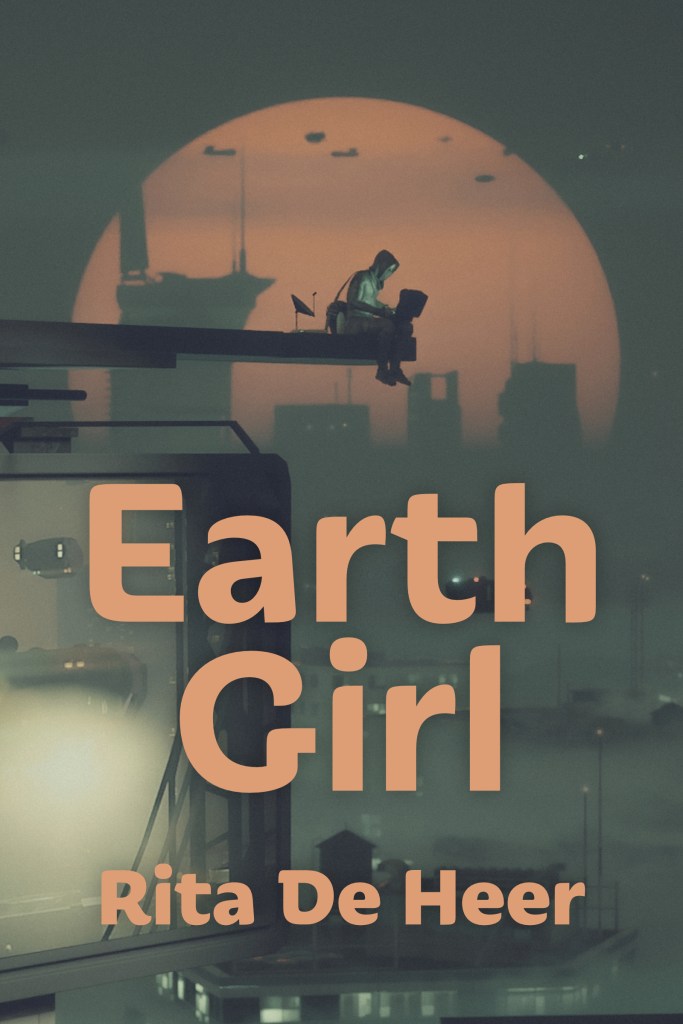
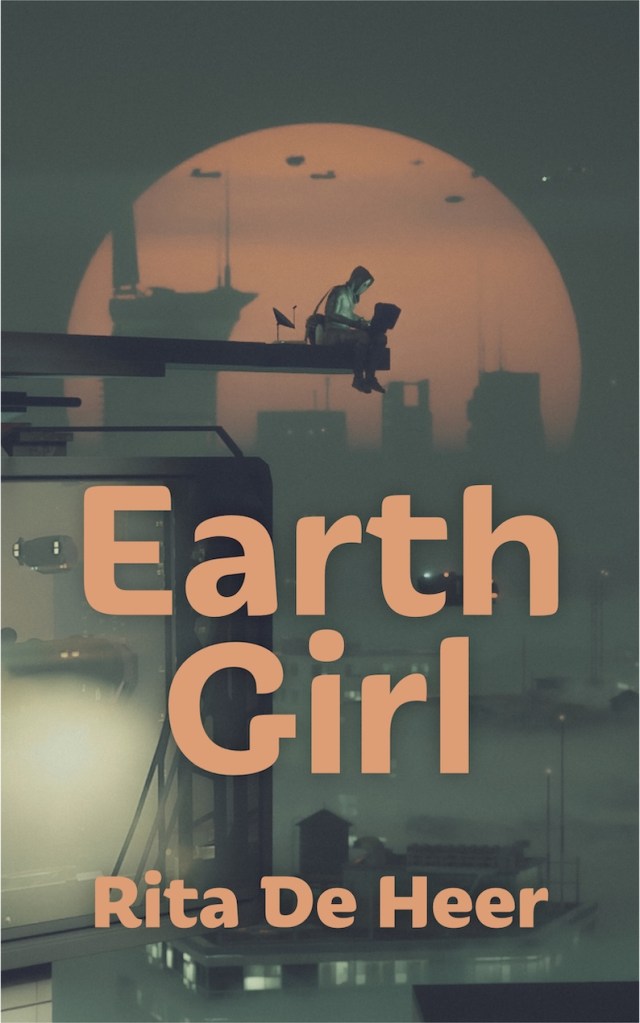
So, while I sleep on MELD, I’ll repost EARTH GIRL. I don’t think I’ve yet posted her story on this (WordPress) blog. Lol, among 600+ posts? I can’t find it. I think offered it on Google+ back in that day.
I’ve got a nice cover for it, thank you ronnie@https://tegnemaskin.no/
Meld, 5
Naturally, this floating jetty at Broome from the Countryman Newspaper, West Australia, is not what I was thinking of for a jetty in Meld. But it’s so amazing! Look at the cattle trucks in the picture. Like a pair of miniatures. This set up is a far cry from the jetty in Broome back in the 1980s when I was there.

Meld, 4
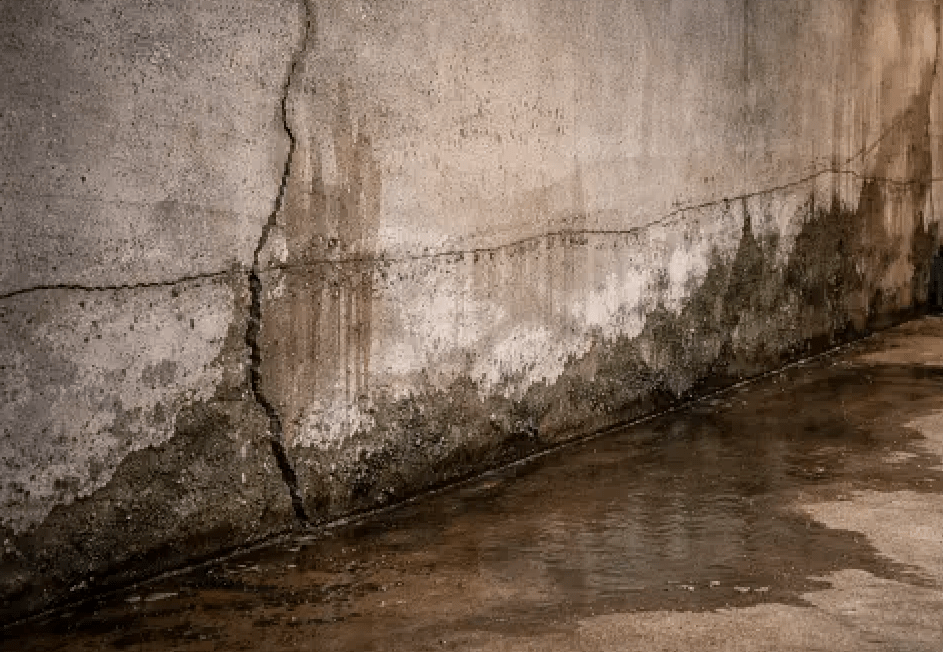
Digging deep into the internet to find the kind of grungy image to illustrate this chapter, I came upon hundreds of photos of leaking basements. Many in Florida. Seems like the end of the world as we know it is starting to happen there. Sea levels rising.
But that’s these days. The days of Tardi and Shad are a couple of hundred years into that future.
Meld, 3
Imagine a few slabs of these for the load in the boat …

Screenshot from barbequesgalore.com
Meld, 2
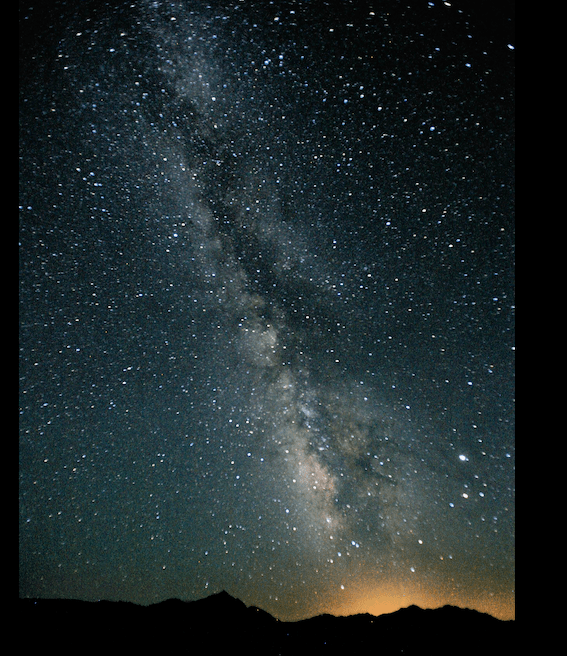
Image by Steve Jurvetson – Flickr Photograph of the Milky Way in the night sky over Black Rock Desert, Nevada taken on 7/22/2007. It is a 54 second exposure taken with a tripod mounted Canon EOS 5D digital camera with a 16 mm lens, wide open at f2.8 and ISO 800. via Wikipedia
 Rita de Heer