

An unusual color … I expected their next stage to be greenish grey. Wonder if I caught them in mid transformation? But could also be due to the food supply, not their usual.
An unusual color … I expected their next stage to be greenish grey. Wonder if I caught them in mid transformation? But could also be due to the food supply, not their usual.

Six of these little critters are chomping down on my bolwarra bush. Not their usual food as far as I can make out.
Reading Helen Scwenke’s & Frank Jordan’s Create More Butterflies tells me that an Orchard Swallowtail will lay her eggs on any tree or bush in the citrus family.
Yet I thought I saw a large blackish butterfly in this bush. The caterpillars somewhat resemble the instars on p33 and there is a very small sandfly bush beside the bolwarra.
The caterpillars as you can see have a much closer resemblance to those of the Fuscous Swallowtail on p20. There’s only the lime berry mentioned for host plants for thst variety of swallowtail.

Here’s one doing its weird standing-up-in-the-sun move. Never seen that before.
The whole event is pretty exciting and was one of the reasons—the possibility that butterflies would visit my balcony garden—that I decided on a level two apartment rather than, say, a level seven place.
To top it all off, me getting an in house companion in the form of a cat is what made it possible for butterflies to visit. Before I got Moggy noisy miners, a pernicious sort of bird visited the balcony despite my efforts to keep them away, and clean out all insects good and bad. They even had a go at catching my fish. Moggy keeps them away and the caterpillars are safe.
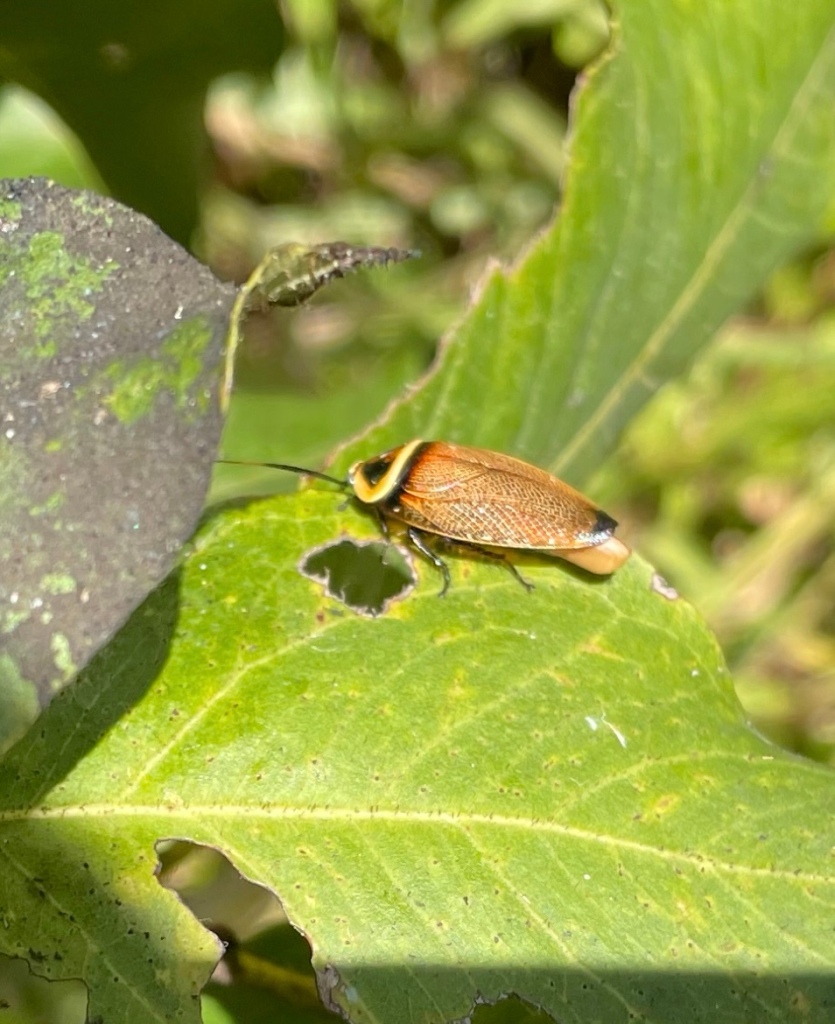
The jury is out on the bug’s ID. Just found a similar looking one in the Wildlife of Tropical North Queensland, a cockroach probably immigrating from Asia.
Or it could be a sap sucker related to the bronze stink bug. There is a sap sucking bug species, like this one on the Angophra sp, for all major tree species in Australia.
European honey bees very busy among the Tuckaroo flowers …
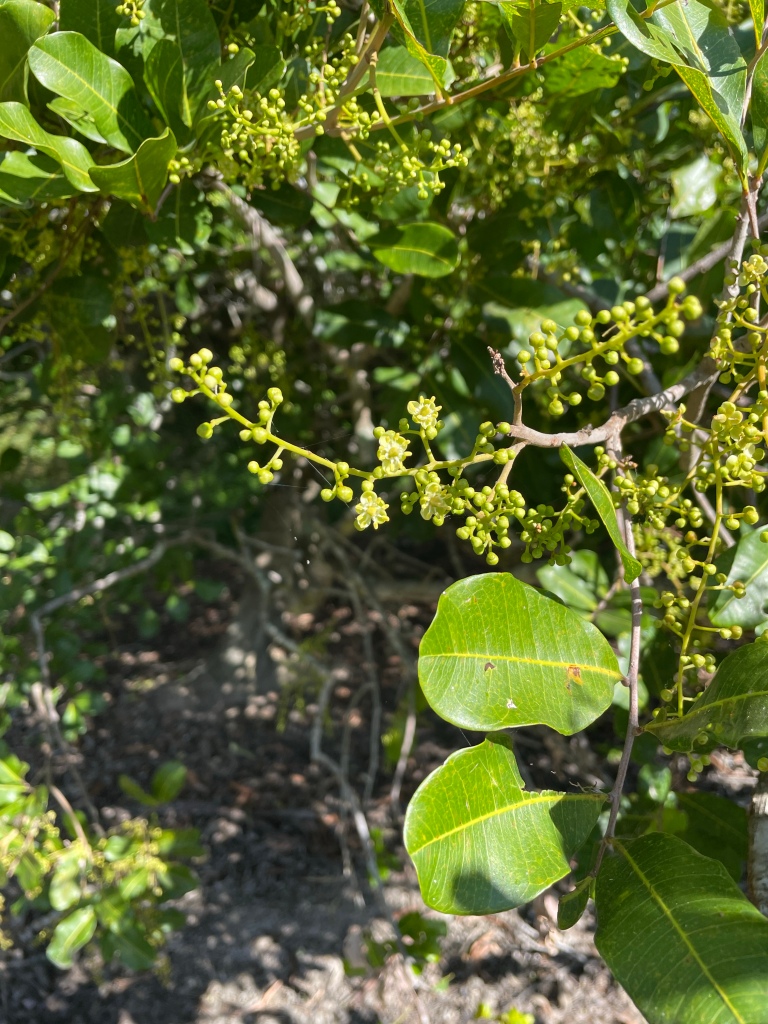
I had a little video clip here, but guess I need to negotiate with WP on that, and am on my mobile just now. Think of the above as a place holder.
A bunch of tiny blue butterflies skipped in amongst the grasses
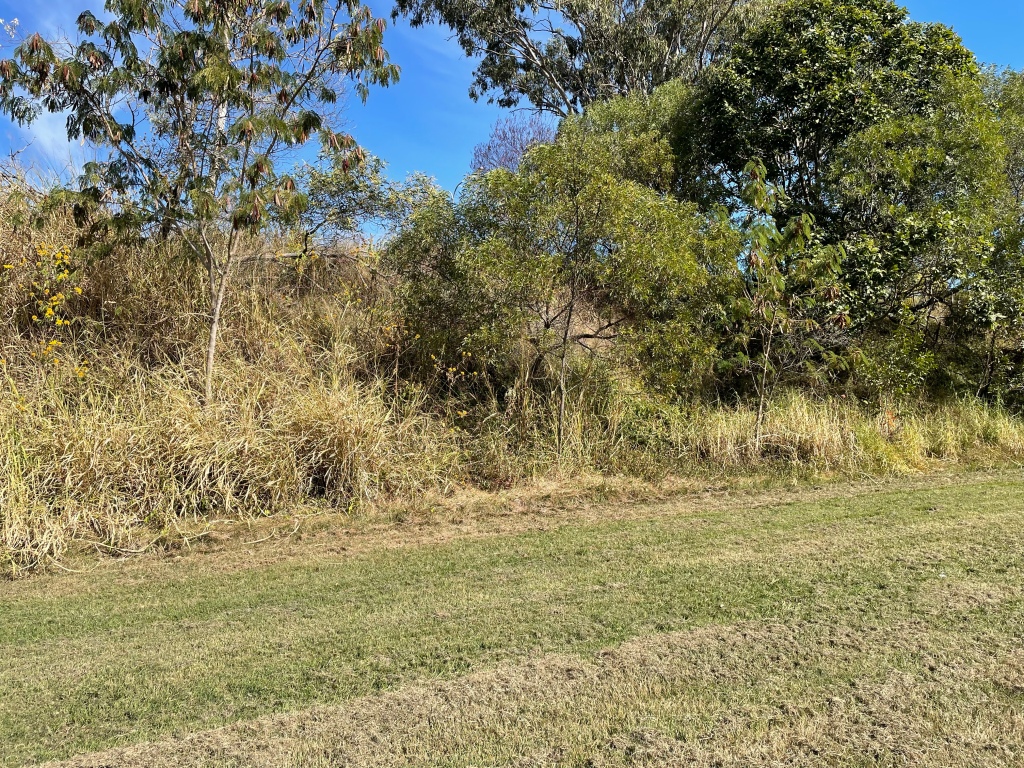
Fast fliers that never sit still they are one of approx 63 similar little blue butterfly species in the region, according to Helen Schwenke in her Create More Butterflies. I saw them among the above grasses.
If they were the Common Pencilled-Blue variety, they would’ve had plenty of food for their caterpillars for the Tuckaroo is a common host plant.
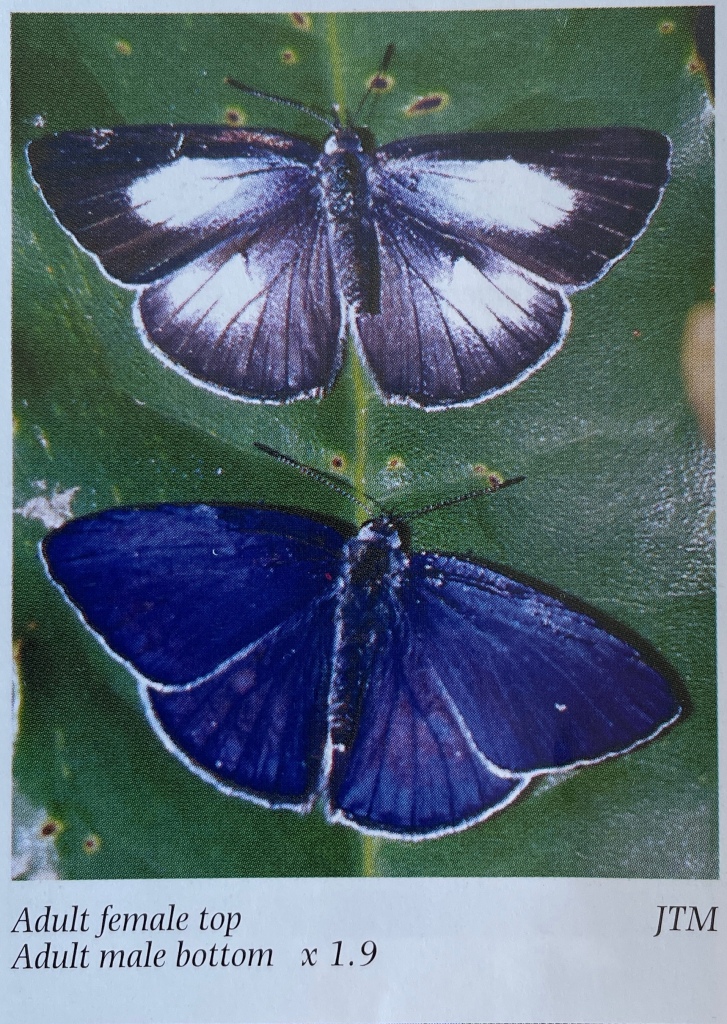
My first butterfly at this place. The possibility of continuing to enjoy vists of butterflies is one of the reasons I wanted to live on the second floor, not the tenth.

I think an orchard butterfly, but not sure, investigating my bolly gum. I don’t have the Latin binomial at the end of my fingertips so will add in later.

In the foreground the butterfly rising from the plants, leaving disappointed, no doubt, not yet having found the citrus only a little distance toward the back of the plant array.
In the background a vast herd of Cumulus mediocris. Yes, that is what they are called. Thes are clouds of the lower altitudes, 2000 to 3000 feet above sealevel.
Cumulus mediocris appear as wide as they are tall, have proturbances and sproutings on top and do not usually cause rain, though can develop into angry and towering Cumulus congestus thunderclouds.
 Rita de Heer