
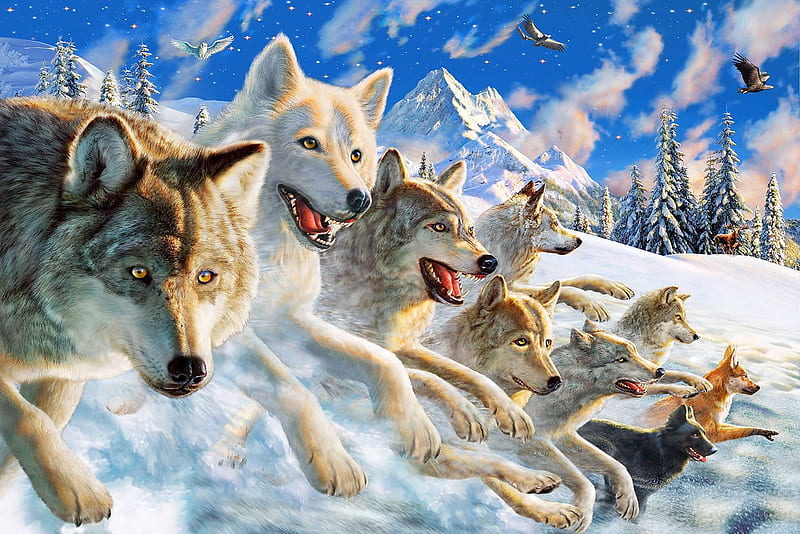
This image of running wolves from peakpx.com
This image of running wolves from peakpx.com
Various species of Leptospermum, or Teatree, an Australian native genus have been made into balms and other medicinal products for thousands of years. Here the flower and fruit of the Pink Teatree (Leptospermum squarrosum)
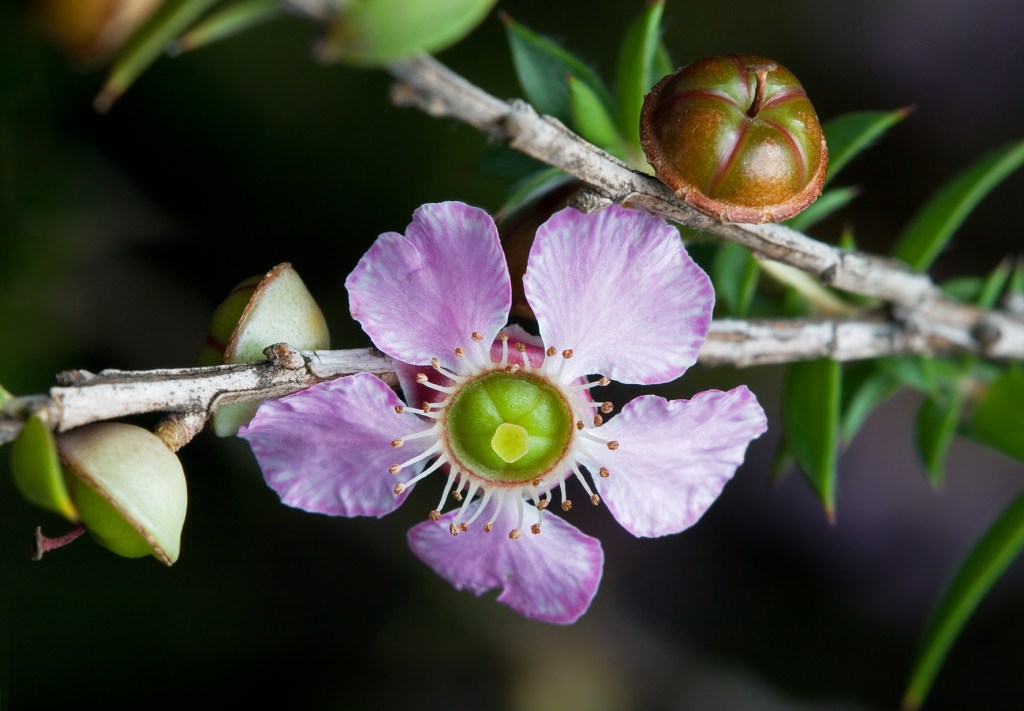
By JJ Harrison (https://www.jjharrison.com.au/) – Own work, CC BY-SA 3.0, https://commons.wikimedia.org/w/index.php?curid=6655154
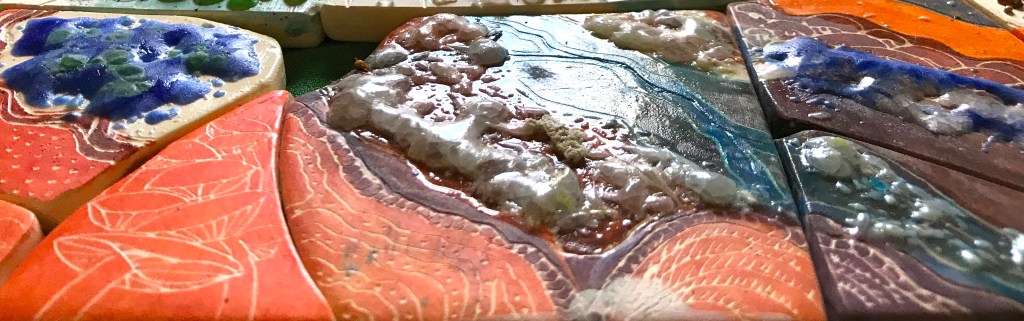
I’m pretty happy with this image, another cut from a ceramic puzzle I once made. The original 30 centimeter tile broke across during storage, a risk associated with green-ware. IE not yet kilned. I took the pieces home over the Christmas holidays to decide what I was going to do with it.
Ended up breaking them into 13 pieces to try a different experiment on each piece. In this photo are four of the pieces representing a creek. As well as incising them, and painting them with ceramic slips, I searched one of the local bottle dumps and found fragments of old blue and old white glass to crush. Kilning the glassy fragments made the foamy creek water featured on these pieces. Below them the pieces that were inscribed with creek bank vegetation and fungi.
The so-called Australian Meat Pie … a traditional savory delicacy if you can eat gluten and beef … that nowadays comes in many different flavors, of meat as well as sweets. traditionally eaten out of the hand, not from a plate with a knife and fork. Although pubs do plate them and serve them with mashed potatoes, peas and gravy. Not in the case of Jay Jason though, he’ll bag them.
By Finbar.concaig – Own work, CC BY-SA 4.0, https://commons.wikimedia.org/w/index.php?curid=93219006
These look a bit like the kind of roots growing from Tardi’s heels and elbows … minus the washing pegs marking out root regions. This photo from IAP – Institute for Applied Plant Biology
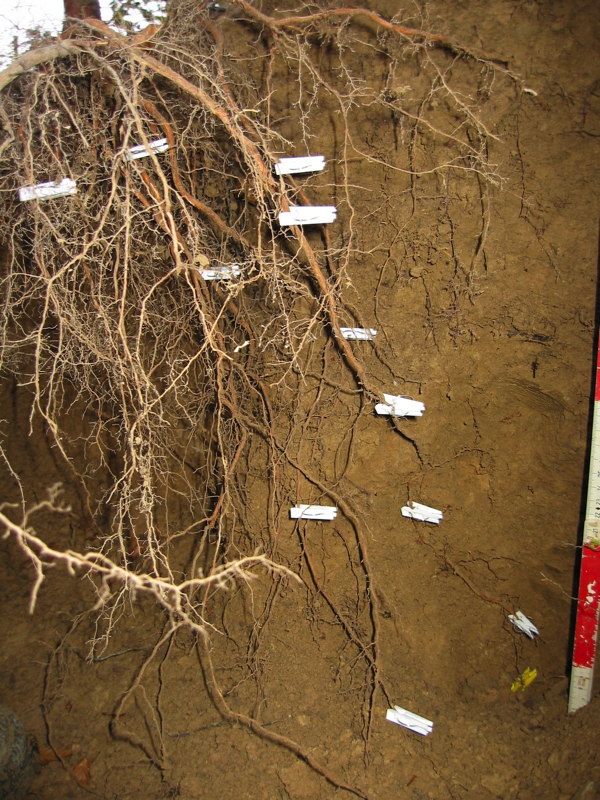
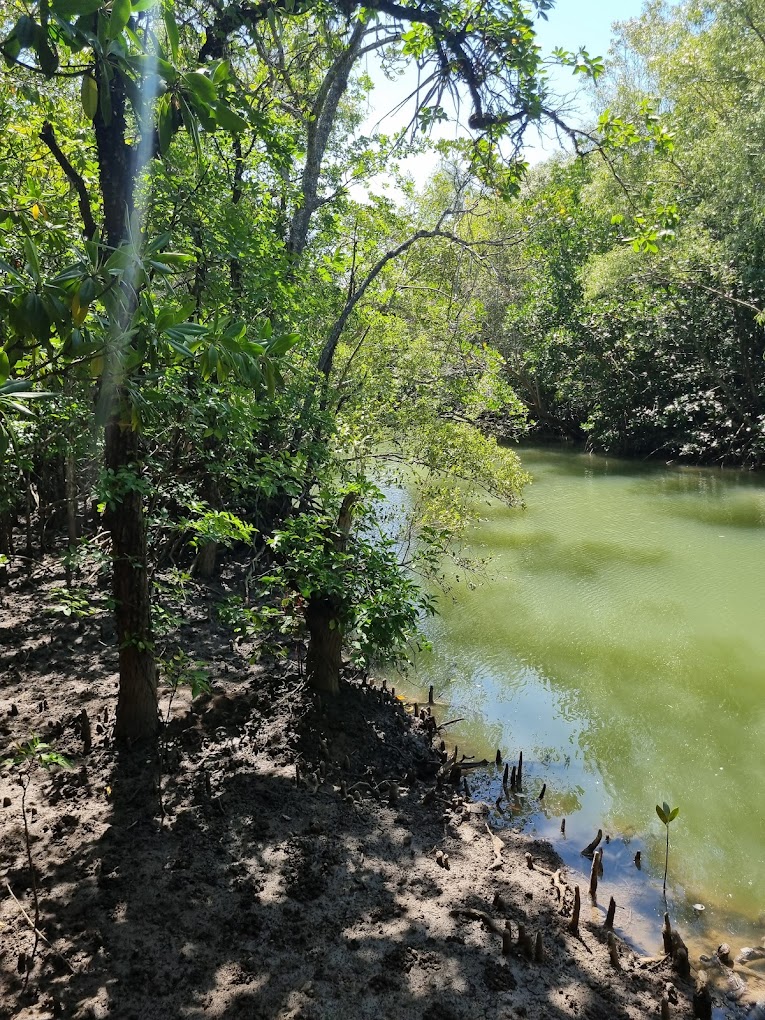
Photo by Emily Miranda, featuring Cairns wetlands (North Queensland, Australia), not the kind of mangroves I imagined for this chapter … here, in the photo, the trees are taller. Down in Northern New South Wales, the mangroves are about half the size. And here, there will be crocodiles.
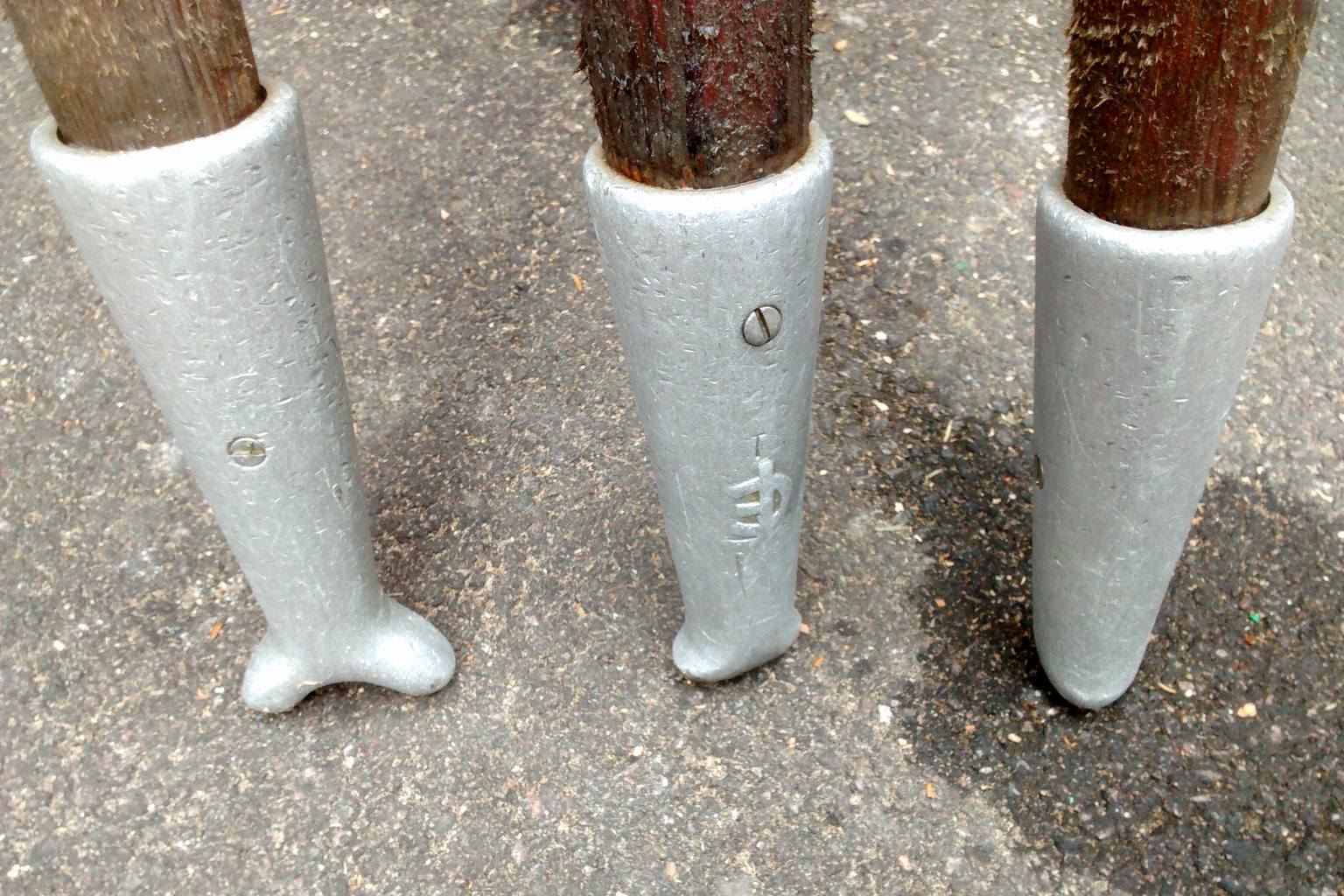
Three punt pole shoes of cast aluminium, with a screw into the wooden pole, swallow tail in varying states of wear By Cmglee – Own work, CC BY-SA 4.0, https://commons.wikimedia.org/w/index.php?curid=50325485
“The basic technique of punting is to shove the boat along with a pole by pushing directly on the bed of the river or lake. In the 1870s, when punting for pleasure first became popular, the normal approach was for the passengers to sit at the stern on cushions placed against the till, and for the punter to have the run of the rest of the boat. The punter started at the bow, planted the pole, and then walked towards the stern, shoving the punt forwards. This is known as “running” the punt. It was the normal technique used to move heavy fishing punts. As pleasure punts became lighter, it became more usual for the punter to stand still – normally towards the stern – while shoving. This is called “pricking” the punt. Pricking has the advantages that the punter is less likely to walk off the end of the punt inadvertently, and that more of the punt can be used to carry passengers.[6 from Wikipedia.
 Rita de Heer