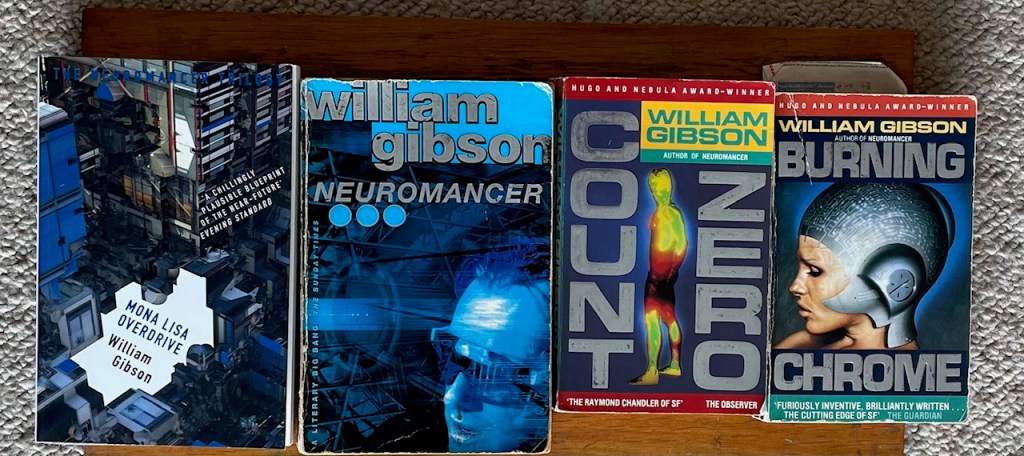
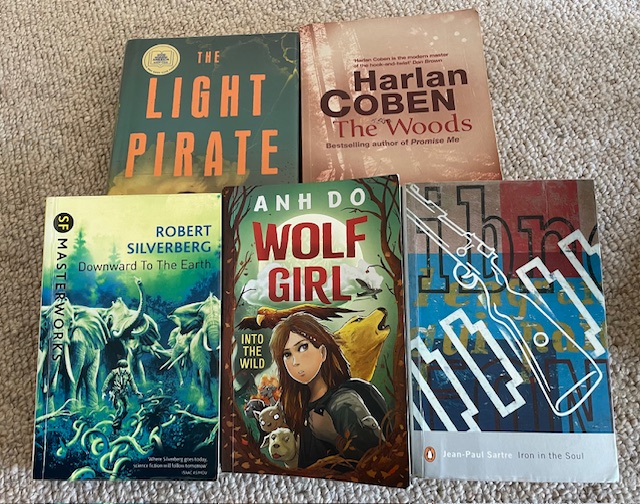
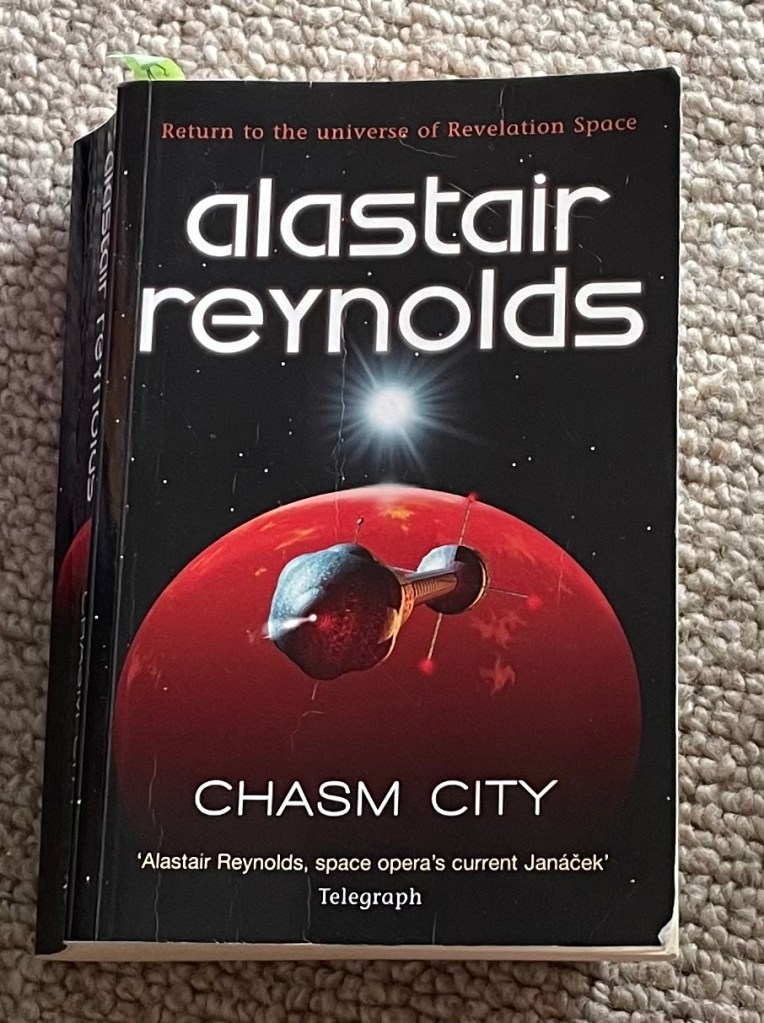
Reading …

Good resolutions at the beginning of a year aren’t my bag but this year I thought I would keep a record of what I read the whole year.

In my teens, with no TV at home, a boring school life–working well below capacity I think now–and an almost non-existent social life, I often read a book a day. A regular bookworm, I chewed through most of the high school library in the first year, and was then provided with the truly educational stuff by the high school librarian. That lady saved me.

Mrs Murray. A short, orange-haired dragon to every other student, she loaned me many interesting and exciting books from her own collection. Historical fictions, lives of explorers, a journal purporting to be by Marco Polo, good novels. It was with her support that I managed A grades in Art History, Geography and Biology, a credit in English in my finals. I never studied, I read whatever came to hand. All of it grist to the mill.

I went on to use that formula all my life. All my learning is done by reading around in a subject. Two years ago I started a course in Dream Interpretation and I’ve collected a library of about twenty books, long and short. Now, while I’m still recording my dreams and practicing their interpretation, I’m slowly falling back into my normal reading habits.

Last year I read some great fiction that I wish I remembered better. I prefer thinking it’s because I have a lot of stories always on the go, that I don’t remember everything I read as well as I used to, but of course it’ll also have something to do with ageing. Forbid the thought.

Or maybe it’s to do with needing to keep myself severely in hand, not over-excited, not over-do it, keep myself on an even keel etc etc to float my ME/CFS riddled carcass through the sea of life.

So, book one of the year was book four of a sequence I began round about Christmas time. Those Who Perish by Emma Viskic: A Caleb Zelic thriller published by Echo in 2022. I thoroughly enjoyed all four of these detective fiction/thriller tales. Not least because I’ve been channeling an elder of 150 years ago, the days before hearing aids.

My hearing aids are working at approx 20% and the repair place is not re-opening until Monday–two more sleeps–and can’t come soon enough. There are far more women in my world now than men, yet men’s voices I can hear, and women are like they are mouthing noiselessly and I am not a good enough lip-reader.

Caleb Zelic, though a frustratingly impulsive protagonist, is mostly deaf and his story is punctuated by mal-functioning hear aids, people who don’t move their mouths when they talk, or turn away and talk so he misses important clues, etc etc. All things I could totally relate to. He’s a well-drawn character, the events he gets involved in are realistic, while at the same time a gripping read.

Somewhere in there, also in the first week, I read another detective fiction, which was entirely forgettable as I had to scan the back cover just now to help me remember it. When She Was Good by Michael Rowbotham. Published in 2020 by Hachette. Although Robotham is one of my favorite detective fiction writers, this one left nothing behind in me except for an Albanian proverb. “Nobody values the truth more highly than a liar.” The primary protagonist is a Cyrus Haven, forensic psychologist, and he just doesn’t have the charisma of his colleague, Joseph O’Loughlin, Robotham’s first forensic psychologist. Maybe I’ll chase those up and re-read them.

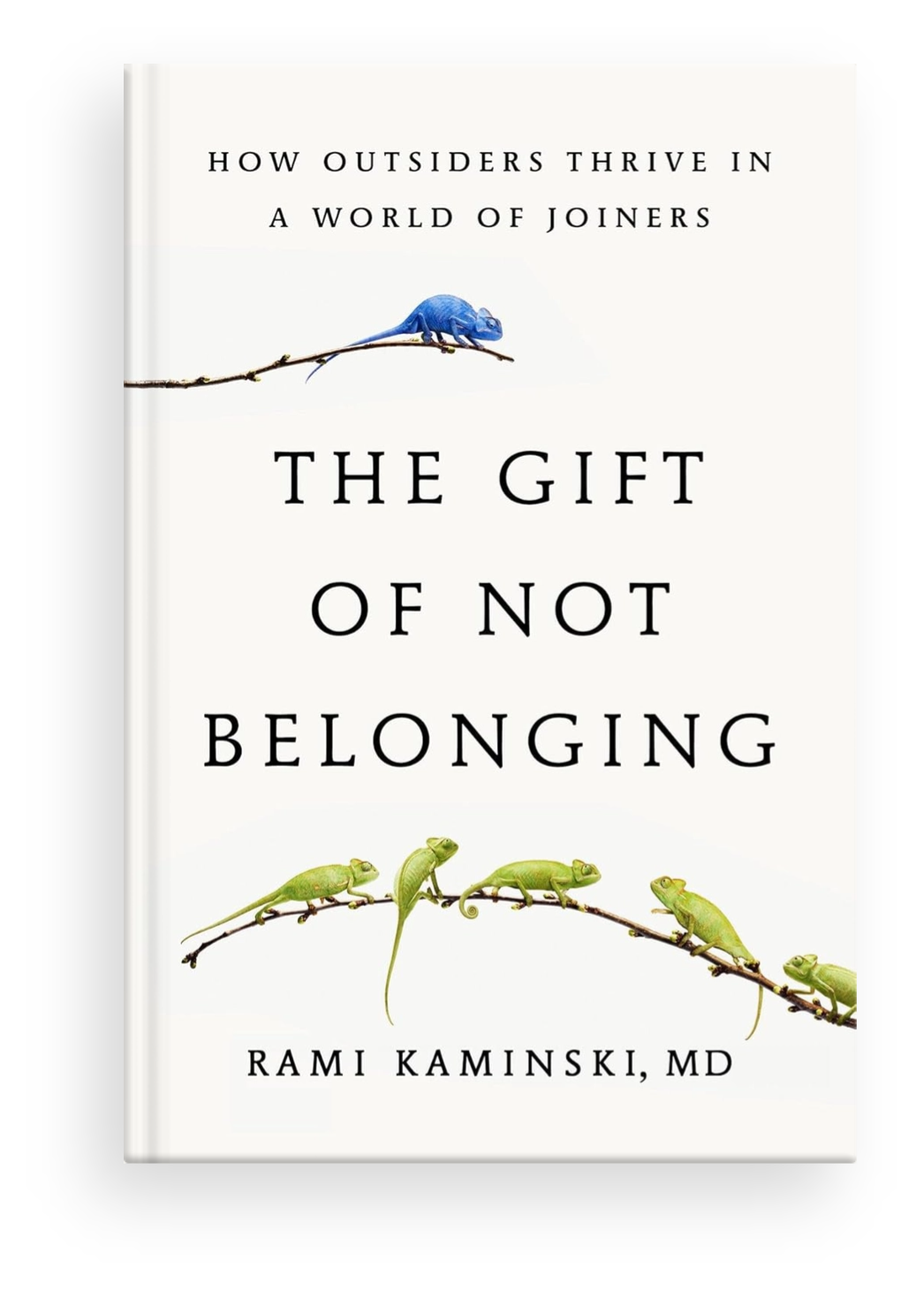
While out grocery shopping I tripped over a bookshop. Fatal, as any bookworm will tell you. Normally I steer my trusty mule in a different direction but this time I had to pass it. I came away with a book I’ve had on my list for over ten years, more on that in the goodness of time, and The Gift of Not Belonging by Dr Rami Kaminski, subtitled: How Outsiders Thrive in a World of Joiners. Published in 2025 by Scribe.

Just reading the acknowledgements told me it was my kind of book … more on that next time.

This is the work of an otrovert. As such it cannot be the fruit of a team effort and presents a dearth of people to acknowledge. …

Food: GF Bread

‘Falling off the Wagon’, is a phrase that originated in the Temperance Movement, according to Wikipedia.

Meaning falling of the water wagon back into alcoholism. Getting back onto the wagon means getting sober again. I’m sure I’m not telling you anything new.

Every so often I fall off my gluten free, dairy free, lowFODMAP and sugar free penny-farthing-bicycle and then I am in pain and discomfort.

Getting back onto my penny-farthing bicycle is a matter of figuring out where the bad stuff has crept in. While one teaspoon of gluten-containing flour in a loaf of bread is not going to cause any problems, a cup of 100% wheat flour will. And I’ve been mixing spelt flour in my baked goods to encourage yeast action.

And having that bread daily. Having anything you’re sensitive to daily, is another no-no for people with a lot of allergies, intolerances and sensitivities.

Having a particular food once every three days usually prevents a build up of the bad chemicals in the body. But sometimes all I want is to be able to eat something without worrying what it will do to my chemistry.

That’s when my penny-farthing slams to the ground and I fall by the wayside.

Which is why I’ve started experimenting with baking my own bread. Commercial gluten free breads tend to have a ‘stampede of ingredients’, and the breads that are any good aren’t always available. The phrase ‘stampede of ingredients’ … so appropriate to food intolrances … comes from the MooGoo people, who make natural skin care products.

Cutting gluten-containing flour from my diet only half-fixed my problem. I came to the conclusion yesterday it has to be a capsule filler causing me grief. I’m now taking 0.9 mg LDN daily, either a (3 x 0.2 + 3 x 0.1) dose equaling 6 capsules, or (4 x 0.2 + 1 x 0.1) equaling 5 capsules.

Meaning, I’m taking a lot of Avicel cellulose filler. And I’ve been reading in a pertinent group that this stuff gives a lot of people grief. They either have their capsules compounded with a different filler and that’s a minefield I don’t want to go into right now, or they throw the contents of their capsules in water. The LDN dissolves and the Avicel is the residue at the bottom of the glass, and then drinking the water.

That’s what I’ll be doing. I still have about one hundred and fifty capsules to work through before I can ask for a different filler. It’s a real “Good Grief, Charley Brown!” situation.

Lunch … couldn’t wait any longer. Wilted greens, avocado, a few olives and the equivalent of approx 2 slices of newly-baked bread. A third of an apple. A jug of hot salted water.

After stopping the bread machine for a minute, I hauled out the bucket and scooped out the equivalent of two slices of bread. Bucket back in to finish the cycle, 28 minutes to go. Going on the texture of the bread, it looks like it will be my most successful loaf yet.

‘The Mercy of Gods’

I’m going to try to talk about this without giving anything away since you too might want to read it. It’s worth it. Science fiction.

It definitely took me reading this tome twice before I could be sure that the title says what it says for a reason. And remember that if you’re a fast reader … like I am … it will probably need twice through before you get both the title and the reason for the incredibly detailed viewpoints. It did me.

Those were the two main things I took away from the second time through. I found the incredible nit-picky detail quite irritating the first time. Usually when I pick up a book for the first time, I consume it for its story. It’s a make or break reading and if it doesn’t come up to my expectations I’ll be leaving it in the laundry.

Lol, “leaving it in the laundry” is a euphemism for getting rid of it. Back in my youth when I lived on the road for three years, books were regularly left in a camp-ground’s laundry for swapping. You’d leave your excess luggage in the form of books and magazines there in exchange for things you hadn’t read yet. No mobile phones in those days. The really good books that I found in that way and that I couldn’t abandon like that, I would post home. Still have a couple that I collected that way.

Here at the retirement village, there’s quite an extensive library of books left by people not wanting to store them in their apartment shelves, I assume. I’ve left a few of my acquisitions there too. I’d say that’s the primary method of acquisition. Detective fiction is the most popular genre here.

The second time reading a book, since I already know the plot and outcome, I can concentrate on the detail. And in The Mercy of Gods there is a lot of talk and thinking by various characters. Some that irritated me first time round became a necessary flow-of-consciousness to enable me to negotiate–along with the character thinking the verbiage–the extremely difficult situations presenting themselves.

Situations that I might have glossed over first time round. [Yeah, I know. Glossing a novel is wasteful on a number of counts. What can I say? Chasing an outcome is my addiction.] The primary situation is a bunch of humans in a very alien situation. I take my hat off to the authors’ world-building and ability to explain what is happening in the extreme environments they’ve invented.

Another really great process … not topic, not event, not character … what’s left? Process? So, another really intricate and interesting process is the way the humans are made to pit themselves against what they think is the target which turns completely on its head. You just will not see that result coming. Even me telling you like this won’t help you, because if you are a normal human being you’ll be reading along waiting for something to happen. It’s dense, opaque and a great read! Go read a book review somewhere if you need spoilers.

My very first five-star read this year!

About Blogging: Drafts …

Today my Drafts folder contained a list of ten titles. It’s the place where I’ve got in the habit of keeping ideas for future posts but looking them over today, I am disappointed at how many just aren’t current anymore.

At least one is dated back to May last year and since there have been eleventy-five articles about it in the press, anything fresh I might have had to say about it has gone into oblivion.

A problem with about a third of the ideas/titles that I bothered to record, is that they have no accompanying notes. I want to go back and ask myself, huh? What was that about? And as not-very-good-titles give me no clue. Useless in the here and now.

Third are the ideas where I pasted a link that I intended to discuss. Several of those apparently had a use-by-date and now show up with error messages.

So there are three recommendations for your—and my—Drafts folder … stay current, make more notes and don’t let anything hang in your drafts folder for longer than maybe 6-8 weeks.

Lol, one good thing about not finding any inspiration in my drafts folder is that it gave me a topic to write about.

Two for the price of one, in this instance …. searching for an appropriate image … and none to be had … thought I might as well catch up on some of the books I’ve been reading. This one over the Christmas – New Year break.

I often have more than one book on the go and this one, a calm read, was a great contrast to The Mercy of the Gods.

My interest in Ancient Egypt was kindled when in my teens one of my brothers had to have his tonsils out—which necessitated a hospital stay—and any child having to go to hospital got a book as a get-well present.

My father didn’t always pick the right book and the Tutankhamen one seemed to have fallen flat with the patient. Some of us at home gobbled it up.

Searching for the Lost Tombs of Egypt is more an acount of the tombs that Egyptologists have expected to find and haven’t yet. It’s amazing to me that with all the digging that’s been done people still expect to find anything new.

This book also explains the Old, Middle and New Kingdoms, how they relate to each other, and lists all the known pharoahs. Even Alexander the Great gets a few pages. It’s possible he was buried as a pharoah, somewhere in Egypt. One of the tombs still to be found.

It’s a book that can be thought of as a reference book but belongs to the in-house library. I enjoyed it, as I said. Definitely worth reading for Ancient Egyptophiles. Chris Naunton’s style makes it an easy and interesting read.

Cory Doctorow: Proud to be a Blockhead

Under the above title was going to be a link to Doctorow’s post of that name, but I don’t think so. Not yet. The link I pasted turned into a wall of text, virtually unreadable. So, again, this post will be the ‘About Blogging’ … how often already this year have I tagged a post that way?

Because what happens usually when I click on a Share Button, the title of the article/post to be shared and its URL are copied and saved on a virtual clipboard. Then, when I click and copy on a place in my post of my choosing ... usually after I’ve introduced the article/post as I intended to do here … the article/post will paste into the position directly under the title and shove the intro to the bottom, or into a never-never land where it can never again be found. (Yes, that is a hint to myself to save a draft though I’m not sure if that’ll work.)

I can but give it all another go.

Lol, this is a straight-out quote that reverberates in my head … from one of my own fictions, and when I say or think those words, I always feel like I’m hovering over Tardi Mack (trucker and surfer starring in Mongrel [published] and Meld [still being edited]) saying it while he is giving x y or z problem another go.

Intro

I’m proud to be a blockhead the same as Doctorow. Quoting from Doctorow’s article … “the most laughably false statement about writing ever uttered is Samuel Johnson’s notorious “No man but a blockhead ever wrote but for money”: … Yep. I’m definitely a blockhead.

There’s so much in this article that resonates with me, that I relate to, the whole article is rich with quotes about ‘making art’, creative endeavors of all kinds, how badly musicians are paid, and that by Spotify that people tell me I ought to be ashamed of not using them in preference to Apple Music, for example. All of them guilty of the same practices?

Why it’s important to read and read lots, how writing is a way of thinking, a way of working stuff out. While Doctorow is afraid his luck will run out in relation to his writing career, I’m often afraid that the internet will fall over and how easy that will be when it does, with all the links in the chain from me here typing this to you opening WordPress or your mail service, and reading. And there’s much more.

So I thought you might as well read the original … https://pluralistic.net/2024/12/21/blockheads-r-us/

‘Pee Dee Effing’

Lol, that doesn’t look so good for a couple of reasons. But the turning-a-document-into-a-pdf process should have its own verb by now, it’s such a common operation. Of course, there could already be one and I have missed it. Let me know?

When I first started blogging, I’d laboriously do the formatting off-line, then when I copied and pasted into the blog … flit! All the formatting was lost and I’d have to start again. So for me, turning something into a pdf is nearly always about preserving formatting, especially when I started posting up Bosley’s Builders.

The hold-up had two prongs. One, I needed a word processor other than MS Word for the operation. MS Word have lost my custom. Not at all important in their scheme of things, I’m sure. But say a million of us decide not to fork out either the monthly or the yearly cost? They’ll sit up and take notice then. When I saw that they don’t sell copies outright anymore, I was gone.

So, Scrivener is it. I’ve been using Scrivener for a good few years for preliminary drafts. Their latest version has the possibility to save documents into pdf mode. They haven’t put their prices up and they don’t profiteer by forcing people into a perpetual loan situation.

The second prong of the hold-up has been me coming to grips with writing and formatting Bosley’s mob into Scrivener in the first place.

Lodestar 56b: Scrim continued

Part Two of Chapter 56: Scrim Learning his Ropes

In the night, a number strong with drink clambered up to Scrim’s hide to talk about his fate and how he wanted to forget it with sex. “What about it, partner?” he said.

Scrim rolled to his feet. Pushed the number to the window hole, then fought him through it.
The number screamed getting pronged on an upstanding old iron below. He screamed and screamed until the transies came first for laughing at him and chiacking, and then killing him some more with their knives.

Scrim hugged himself tight all night breathing Min-breathing.

When the hooter called, the transies left quick-smart. Then crows came. So crows clean up the dead in the city as well as in the rubble. Soon after, Mapmaker squeaked by on his wheels.
Scrim stayed hid to see what was what.

Mapmaker stopped at an alley across the street. Put his trike into the alley. He set out his things in the mouth of the alley. Both sides of him were the dead houses of the wall strung together with lectrics on their outside.

Further in, behind the trike, stood a steel egg as tall as a Scrim, an egg that Scrim could only see iffen he did a trick with his eyes where he stared through the wall behind the egg and suddenly the egg was there.

Scrim’s side of the street—what he saw of it yesterday—was a cobble of lanes and high-ups, all of them near to half-broke. Not one window had glass. Entries were black holes like the black hole into the home cave in the rubble. He saw another egg when he leaned a little out his window hole. That one at the west end of the street, where the sun sank.

Both sides of the street now had people setting up tables and tents. They filled the tables with all kinds of green plant foods, and roots, and flats of bread what made him hungry. Some had bottles of drinks. Making him thirsty. In the rubble the littlies got theirs first. The long-legs last. Here, he didn’t know and wouldn’t find out if he didn’t go down.

He tried to not see the crows. Made himself a mouse and crossed the street to Mapmaker.
“A man left me these,” Mapmaker said. “Smoked rabbits. I don’t need them. Maybe you can trade the ones you don’t eat.”

Scrim took them, two sixes of naked animals with no fur strung on a pair of strings. Hard-smoked. With short ears and like rabbits only by their same-size.  

A number who came to do business with Mapmaker pushed Scrim so he had to step into the street.

“You, boy! With your rabbits.” A man across the street beckoned him. “You look so lost you’ll get found quick-smart. You trading those rabbits?”

That word again, trading. Scrim had no meaning for it. He shrugged.

“Like, are you swapping?” the man said.

Scrim shrugged again.

“Come here. Stand with us. We’re all getting nervous for you.”

Scrim glanced around. No danger he could see.

“That’s Tom,” Mapmaker said at Scrim past the man sitting opposite him. “He’s a friend of mine.”

Scrim nodded, then crossed the street to where Tom and another man had built a table with poles and an old flat-wood.

Tom shook Scrim’s hand, “Any friend of Mapmaker’s is my friend too. Come behind the table with us. Look at how Wobby trades. I’m the watch-out for danger. Stray whistlers, uncouth transies, crazed numbers and, of course, the customers and their guards. See our scars? Courtesy of Mapmaker. We’ve never got picked yet. Mostly people prefer trading at their houses, at night. Wobby will show you.”

Music started up from a speaker hanging above the place.

“Wrap it up, Tom. Here they come” Wobby said. “Don’t look anyone in the eye, kid. But watch all of them like you are a hawk.”

The customers came tootle-cardling like magpies, the way they chattered and called to each other, making a party in the street. Their clothes were new and all the colors of old oil in a puddle of rain. Their own true wrinkles could hardly be seen under their thin masks, white-painted with friendly smiles, but staring with their own stony eyes at everyone and everything around them.

The numbers buying food and drink were kept moving by a squad of transy guards, the sort what must have got their smarts back. Each customer also had a transy dancing attendance. Sometimes such a customer-and-guardian pair followed a particular number around the market discussing them, be they man or woman, as though the number couldn’t hear what customer said about them.

Scrim burned for the numbers.

After the market, Tom and Wobby took Scrim home with them. They lived a couple of streets west with a handful more people, in a ground-hole hid under a row-house with its walls still standing, roof gone, and hollow inside. A green garden grew inside the walls.

Hundreds of flyers, that Wobby called pigeons, went out in the daytime getting their food and came back at night for sleeping and roosting on every perch Tom and his group put up. Tom’s lot made tallows with pigeon-fat that they wanted Scrim to trade.

“Why not from your stall?” Scrim said.

“Because we don’t want it known we have this good a place and good family.”

“How come you let me know?”

“Mapmaker signed at us that you are his friend so we help him help you be a trader,” Wobby said.

“Did you see the nubies today? Three of them,” Tom said. “The robots,” he explained to Scrim’s puzzling face. “One in the alley behind our friend Mapmaker. One opposite us and one at the end of the street.”

“You telling me and me not seeing them, gives me the heebies worse than any customer-and-guardian tandem,” Wobby said.

“With a trick of my eyes I saw a steel egg in the alley,” Scrim said.

“That’s them,” Tom said. “They’re nubies folded up. Most people don’t have the knack of seeing them. Like Wobby.”

“Why we always bring Tom,” Wobby said.

All week, every night, Wobby showed Scrim the overhead routes through the ruins, what the flyers had showed Wobby, though in some places they had to run along an alley or a street. But that was alright for they were two, one for watching the other-his-back.

At every place Wobby said, “Next week you’re gonna have to be especial careful here on your lonesome.”

The first time Scrim laughed to hear Wobby using Min’s favorite words, “especial” and “careful”.

“Transies is always a gang, never alone,” Wobby said, still teaching Scrim his ropes. “If one sees you, they’ll all chase. But they’re frighted to climb, maybe scared of falling and wrecking their new bodies.”

At the end of every route was a place with people hiding who had use for tallows and smoked rabbits. They gave Wobby and Scrim whatever they grew, whatever they made, whatever they could find. Even sunshine yellow flowers sometimes that Wobby took for Sal, his girl.

At one place Wobby said for Scrim to give a whole tallow for one sheet of thin grey paper that Mapmaker had a use for.

When Wobby gave a tallow and two smoked rabbits at the next place for a pot with a hole like a fist punched through, Scrim despaired his learnings. “What good? That huge hole!”

Wobby laughed. “I love pots with holes. Good for growing things in. It’s great, you getting into trading. I can spend more days in the sun.”
 

— — — —


The first next dusk of Scrim on-his-own, when the meats were all traded away and the new tallows resting after they were made, Scrim searched out a high ruin for his new hide. The nubies had gone home and he wouldn’t meet any transies iffen he stayed off the streets. 

Halfway between the market and Mapmaker’s place were two tall narrow walls once making the corner of a high house. With the rusted bar-ends sticking out inside some-places, it was easy to climb, and all that climbing done out of sight of the street. At the top, to the left of the shaft, swayed a little room on its lonesome, like a tree-house.

Scrim remembered trees. Long time away when he was a bub. Before he was a kinnie. Sleeping that night was good and warm too because he traded two coats that day. His windows were spy-holes in the walls of his hide. In the dawn he spied out his new scene.

Through the middle hole he saw way out east. The rubble with the cliffs at the end of the world. If he had a telescope he might even see Min walking her walk, teaching the new lot their ropes. A wave of home-sick overflowed his eyes. He sniffed it up. I can’t be looking out that hole too much.

At another injury to the wall, in the most east-wise corner, he saw Mapmaker on his roof feeding his pigeons and petting them. After that Mapmaker stood up a thing with a yellow round with yellow stripes spurting from it. Numbers and transies in the street wouldn’t see it, or even Min with her telescope, because of where the thing was between the stair-house and the front wall. Who was Mapmaker signing to?

In his stair-house Mapmaker waved like he knew Scrim’s hide. Then Mapmaker pointed to the round yellow thing like he told Scrim it telling him I want to see you, Scrim.