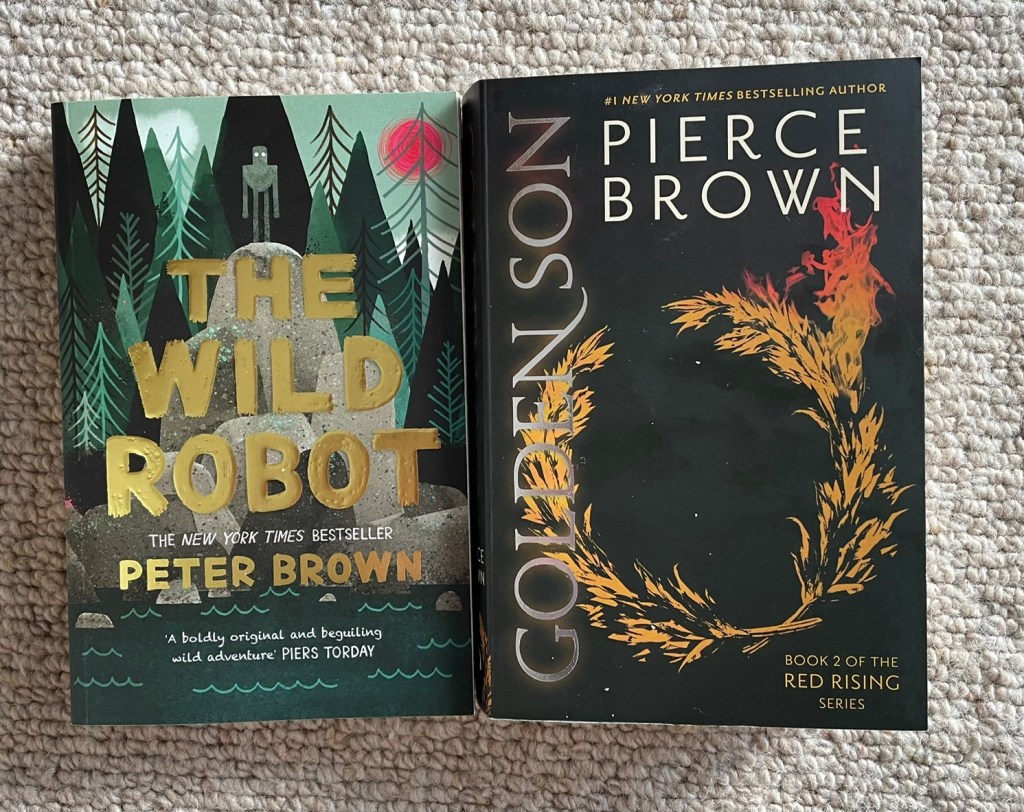
Reading Project, 8

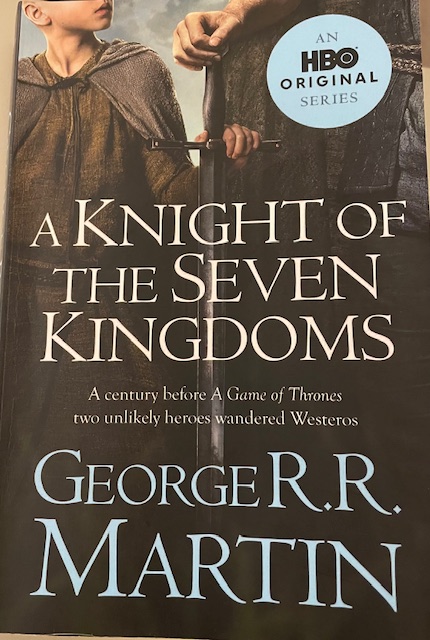
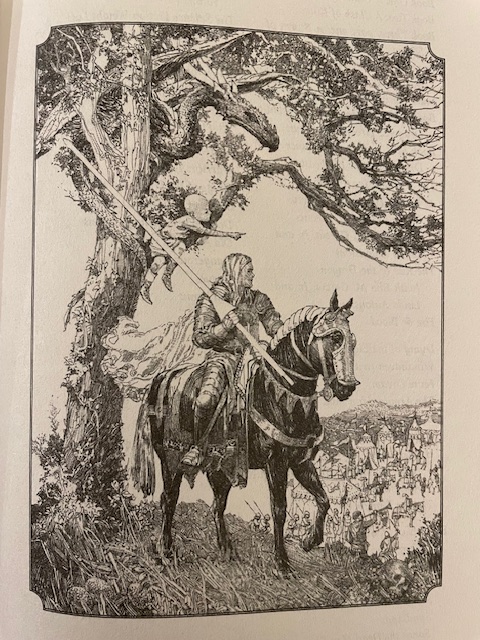
Book 21 … A Knight of the Seven Kingdoms by George R R Martin, with illustrations by Gary Gianni. This edition, being a collection of three novellas, has a complex publishing history but as a collection it was first published by Harper Collins in 2015.

After I saw the HBO TV version, I wanted to read the original, as print novels often are better at showing the complexity of characters. Which was a good move, for as well as the first story, The Hedge Knight, that the TV series is based on it, it gave me two more stories, that presumably will be televised in the goodness of time as installments 2 and 3.

A hedge knight is a knight not sworn to a lord or having land—such as Ser Duncan the Tall—and I guess would be equivalent to a ronin in the samurai tradition. Both are men who wander their countries and offer their swords in whatever battle that will give them food and shelter for a time.

Dunk (short for Duncan) is a young, tall, strong and inexperienced knight wandering the Seven Kingdoms with his squire, Egg. As soon as I read “Egg” I recalled Maester Aemon at the Wall in Westeros ( A Game of Thrones) talking about his younger brother Egg and spent quite a bit of time wondering how that worked. Forgetting that with the right question (ie prompt) Google’s AI would tell me in seconds.

Which it did. Aemon was two years older than Egg and Egg will rule as Aegon V. At the time of these stories Aemon is apprenticed at the Citadel learning to be a maester and he will serve at The Wall.

You have probably guessed by now that I am a Game-of-Thrones tragic. And you are right. I have the book series on my bookshelf. I was a member once of a huge fan club, forty thousand plus fellow tragics, industriously discussing all aspects. Though they worked out the Jon Snow is the son of Rhaegar Targaryen and Liana Stark puzzle and I still don’t know how. I confess I just took their word for it, never could find the proof in the books.

All this is getting side-tracked from the book I’m talking about, but have the excuse that the these stories brought it all back, because it is all connected. Reading it the first time round, it seems like a light read, though the battle at the tournament is quite complex. I had to read that a couple of times, nailing down who fought who and who bit the dust.

But wait, why am I saying it’s a light read? I’m changing that. Only the first story was a particularly light read and I suppose the fact that I already knew the story visually meant I just glossed the imagery in the words.

That’s the problem with visual media of all kinds and reading books after seeing related shows. By feeding viewers with media-ideas for what things look like, viewers who are also readers tend not to read stuff that will clash with pre-“recorded” visuals and as a result miss out on a lot of good metaphor.

Such as … “The spiked ball whirled round and round the sky and fell toward his head as fast as a shooting star. Dunk rolled.”

That didn’t happen in the tv series. Someone else wielded the spiked ball and not at Dunk. Why I can still appreciate it. The other thing to appreciate is a character’s thoughts. … I failed them. I am no champion. I’m not even a hedge knight. I am nothing…

I don’t mind those thoughts, they’re what anyone would think in the situation. But … He never saw dunk the lunk, though, did he?… the twenty-five times that Dunk thought that of himself … that grated on me after the fourth time. (Maybe not twenty-five, just felt like it.)

In the next story, The Sworn Sword, (p119) there’s less introspection as there is more interaction between Dunk and Egg. They are on the road, traveling to their next meal.

This story is book-ended by the two corpses hanging in a cage at the cross-roads where Dunk and Egg stop for a minute for a break and again on their way out. They’re to deliver a barrel of wine to a place called Standfast and happen to stay there, to help the inhabitants get out of a scrape they have with their neighbors about water rights, a complex quarrel. Dunc ends up fighting the opposition’s champion.

The third story is The Mystery Knight (p233). Coming away from Stoney Sept, Dunk and Egg are well supplied. As they near a town, they first see a traitor’s head on a spike on the town walls.

Two and a half pages of Dunk’s ruminations follow, about a law that allows septons to be decapitated for merely talking because … “words are wind” after all … he says. Egg puts his thoughts in where applicable and the whole is one of Martin’s stylistic manoevres to thicken up the story line with historical descriptions including the Targaeryan succession through Bloodraven.

Six days later they arrive at a ferry crossing. Here, again, as they ride toward the inn nearby, there are possibilities of informing the reader about money, as in how little they have, “twenty-two pennies, three stars, two stags, and an old chipped garnet, ser …” Egg informs us and Dunc.

All three stories give the feeling of meandering. The pace is slow while Dunc and Egg are traveling, they are on horseback, with the horses probably walking. Fights are fast blow by blow accounts of action.

Between the slow travel and fast battles unfold long sections of story needing close attention. There’s a lot of detail being slipped into every paragraph. Story-pearls are being seeded in at all times. Early in the story we learn about Bloodraven’s history. At the end we meet him, and learn that he is Egg’s cousin.

I found this book in the YA fiction section in the bookshop where I bought it. The book is probably classed as young adult fiction due to the single story line, the youth of the POV characters, and because it is illustrated.

The amount of detail in it, though, suggests an adult read. Words, phrases, clauses and sentences all contain seeds and reminders that these stories are part of the whole rest of the Westeros culture. It’s one of those books I read fast for the plot and again, slowly, for the complexity.

.Illustration by Gary Gianni.

Lodestar 56b: Scrim continued

Part Two of Chapter 56: Scrim Learning his Ropes

In the night, a number strong with drink clambered up to Scrim’s hide to talk about his fate and how he wanted to forget it with sex. “What about it, partner?” he said.

Scrim rolled to his feet. Pushed the number to the window hole, then fought him through it.
The number screamed getting pronged on an upstanding old iron below. He screamed and screamed until the transies came first for laughing at him and chiacking, and then killing him some more with their knives.

Scrim hugged himself tight all night breathing Min-breathing.

When the hooter called, the transies left quick-smart. Then crows came. So crows clean up the dead in the city as well as in the rubble. Soon after, Mapmaker squeaked by on his wheels.
Scrim stayed hid to see what was what.

Mapmaker stopped at an alley across the street. Put his trike into the alley. He set out his things in the mouth of the alley. Both sides of him were the dead houses of the wall strung together with lectrics on their outside.

Further in, behind the trike, stood a steel egg as tall as a Scrim, an egg that Scrim could only see iffen he did a trick with his eyes where he stared through the wall behind the egg and suddenly the egg was there.

Scrim’s side of the street—what he saw of it yesterday—was a cobble of lanes and high-ups, all of them near to half-broke. Not one window had glass. Entries were black holes like the black hole into the home cave in the rubble. He saw another egg when he leaned a little out his window hole. That one at the west end of the street, where the sun sank.

Both sides of the street now had people setting up tables and tents. They filled the tables with all kinds of green plant foods, and roots, and flats of bread what made him hungry. Some had bottles of drinks. Making him thirsty. In the rubble the littlies got theirs first. The long-legs last. Here, he didn’t know and wouldn’t find out if he didn’t go down.

He tried to not see the crows. Made himself a mouse and crossed the street to Mapmaker.
“A man left me these,” Mapmaker said. “Smoked rabbits. I don’t need them. Maybe you can trade the ones you don’t eat.”

Scrim took them, two sixes of naked animals with no fur strung on a pair of strings. Hard-smoked. With short ears and like rabbits only by their same-size.  

A number who came to do business with Mapmaker pushed Scrim so he had to step into the street.

“You, boy! With your rabbits.” A man across the street beckoned him. “You look so lost you’ll get found quick-smart. You trading those rabbits?”

That word again, trading. Scrim had no meaning for it. He shrugged.

“Like, are you swapping?” the man said.

Scrim shrugged again.

“Come here. Stand with us. We’re all getting nervous for you.”

Scrim glanced around. No danger he could see.

“That’s Tom,” Mapmaker said at Scrim past the man sitting opposite him. “He’s a friend of mine.”

Scrim nodded, then crossed the street to where Tom and another man had built a table with poles and an old flat-wood.

Tom shook Scrim’s hand, “Any friend of Mapmaker’s is my friend too. Come behind the table with us. Look at how Wobby trades. I’m the watch-out for danger. Stray whistlers, uncouth transies, crazed numbers and, of course, the customers and their guards. See our scars? Courtesy of Mapmaker. We’ve never got picked yet. Mostly people prefer trading at their houses, at night. Wobby will show you.”

Music started up from a speaker hanging above the place.

“Wrap it up, Tom. Here they come” Wobby said. “Don’t look anyone in the eye, kid. But watch all of them like you are a hawk.”

The customers came tootle-cardling like magpies, the way they chattered and called to each other, making a party in the street. Their clothes were new and all the colors of old oil in a puddle of rain. Their own true wrinkles could hardly be seen under their thin masks, white-painted with friendly smiles, but staring with their own stony eyes at everyone and everything around them.

The numbers buying food and drink were kept moving by a squad of transy guards, the sort what must have got their smarts back. Each customer also had a transy dancing attendance. Sometimes such a customer-and-guardian pair followed a particular number around the market discussing them, be they man or woman, as though the number couldn’t hear what customer said about them.

Scrim burned for the numbers.

After the market, Tom and Wobby took Scrim home with them. They lived a couple of streets west with a handful more people, in a ground-hole hid under a row-house with its walls still standing, roof gone, and hollow inside. A green garden grew inside the walls.

Hundreds of flyers, that Wobby called pigeons, went out in the daytime getting their food and came back at night for sleeping and roosting on every perch Tom and his group put up. Tom’s lot made tallows with pigeon-fat that they wanted Scrim to trade.

“Why not from your stall?” Scrim said.

“Because we don’t want it known we have this good a place and good family.”

“How come you let me know?”

“Mapmaker signed at us that you are his friend so we help him help you be a trader,” Wobby said.

“Did you see the nubies today? Three of them,” Tom said. “The robots,” he explained to Scrim’s puzzling face. “One in the alley behind our friend Mapmaker. One opposite us and one at the end of the street.”

“You telling me and me not seeing them, gives me the heebies worse than any customer-and-guardian tandem,” Wobby said.

“With a trick of my eyes I saw a steel egg in the alley,” Scrim said.

“That’s them,” Tom said. “They’re nubies folded up. Most people don’t have the knack of seeing them. Like Wobby.”

“Why we always bring Tom,” Wobby said.

All week, every night, Wobby showed Scrim the overhead routes through the ruins, what the flyers had showed Wobby, though in some places they had to run along an alley or a street. But that was alright for they were two, one for watching the other-his-back.

At every place Wobby said, “Next week you’re gonna have to be especial careful here on your lonesome.”

The first time Scrim laughed to hear Wobby using Min’s favorite words, “especial” and “careful”.

“Transies is always a gang, never alone,” Wobby said, still teaching Scrim his ropes. “If one sees you, they’ll all chase. But they’re frighted to climb, maybe scared of falling and wrecking their new bodies.”

At the end of every route was a place with people hiding who had use for tallows and smoked rabbits. They gave Wobby and Scrim whatever they grew, whatever they made, whatever they could find. Even sunshine yellow flowers sometimes that Wobby took for Sal, his girl.

At one place Wobby said for Scrim to give a whole tallow for one sheet of thin grey paper that Mapmaker had a use for.

When Wobby gave a tallow and two smoked rabbits at the next place for a pot with a hole like a fist punched through, Scrim despaired his learnings. “What good? That huge hole!”

Wobby laughed. “I love pots with holes. Good for growing things in. It’s great, you getting into trading. I can spend more days in the sun.”
 

— — — —


The first next dusk of Scrim on-his-own, when the meats were all traded away and the new tallows resting after they were made, Scrim searched out a high ruin for his new hide. The nubies had gone home and he wouldn’t meet any transies iffen he stayed off the streets. 

Halfway between the market and Mapmaker’s place were two tall narrow walls once making the corner of a high house. With the rusted bar-ends sticking out inside some-places, it was easy to climb, and all that climbing done out of sight of the street. At the top, to the left of the shaft, swayed a little room on its lonesome, like a tree-house.

Scrim remembered trees. Long time away when he was a bub. Before he was a kinnie. Sleeping that night was good and warm too because he traded two coats that day. His windows were spy-holes in the walls of his hide. In the dawn he spied out his new scene.

Through the middle hole he saw way out east. The rubble with the cliffs at the end of the world. If he had a telescope he might even see Min walking her walk, teaching the new lot their ropes. A wave of home-sick overflowed his eyes. He sniffed it up. I can’t be looking out that hole too much.

At another injury to the wall, in the most east-wise corner, he saw Mapmaker on his roof feeding his pigeons and petting them. After that Mapmaker stood up a thing with a yellow round with yellow stripes spurting from it. Numbers and transies in the street wouldn’t see it, or even Min with her telescope, because of where the thing was between the stair-house and the front wall. Who was Mapmaker signing to?

In his stair-house Mapmaker waved like he knew Scrim’s hide. Then Mapmaker pointed to the round yellow thing like he told Scrim it telling him I want to see you, Scrim.

Reading …

One of my quarterly goals (Third Quarter) for Discord.com’s The Writing Cartel is to read at least one book a week. Going all right with that goal. I’ve probably read two books a week up to now but that progress may slow when I try to continue my writing progress in the new WIP and finish the old WIP.

Getting distancing happening in MELD to be able to re-think the last couple of chapters is my second goal. The idea is to enable the supporting MC into a stronger role ready for part 3 of the trilogy.

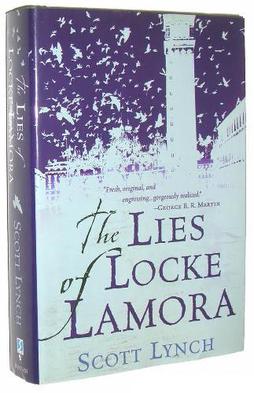
I’ve just finished reading The Lies of Locke Lamora by Scott Lynch. Its fantasy and the world building is out of this world. I loved the main character … he’s a great thief but absolutely the worst skilled murderer in the Gentlemen Bastards, needs other people to save him quite often; lots of twists and unexpected turns in the plot.

The thing that surprised me most, considering I was reading fantasy, was the late introduction of magic … probably about a third way in before it was used. By then I’d almost forgotten there was such a thing as magic. The culture in this world is so well thought out. Commerce is there, being used for scams by the Bastards. Twelve acceptable religions and one unacceptable all have their place. there are plenty of poor people, middle income, and rich all trying to live their own lives. Festivals are fabulous, including the shark combats.

There is a lot of killing murdering dueling sword play and other more intricately inventive ways of getting rid of enemies. lots of swearing. Most memorable line? Memorable lines, I should say. More than I can say. A great read … it will be one of my favorites this quarter.