3 realities. The everyday consensual. The Eleven Islands. The future.
Author: Rita de Heer
Writing is what I do. What I think about. What I meditate on. What I dream up. Listen to. Imagine. Sometimes I sleep. Sometimes I eat. And I walk. Pull out environmental weeds. There are a thousand more things I do, though writing comes into a fair few of those things too.
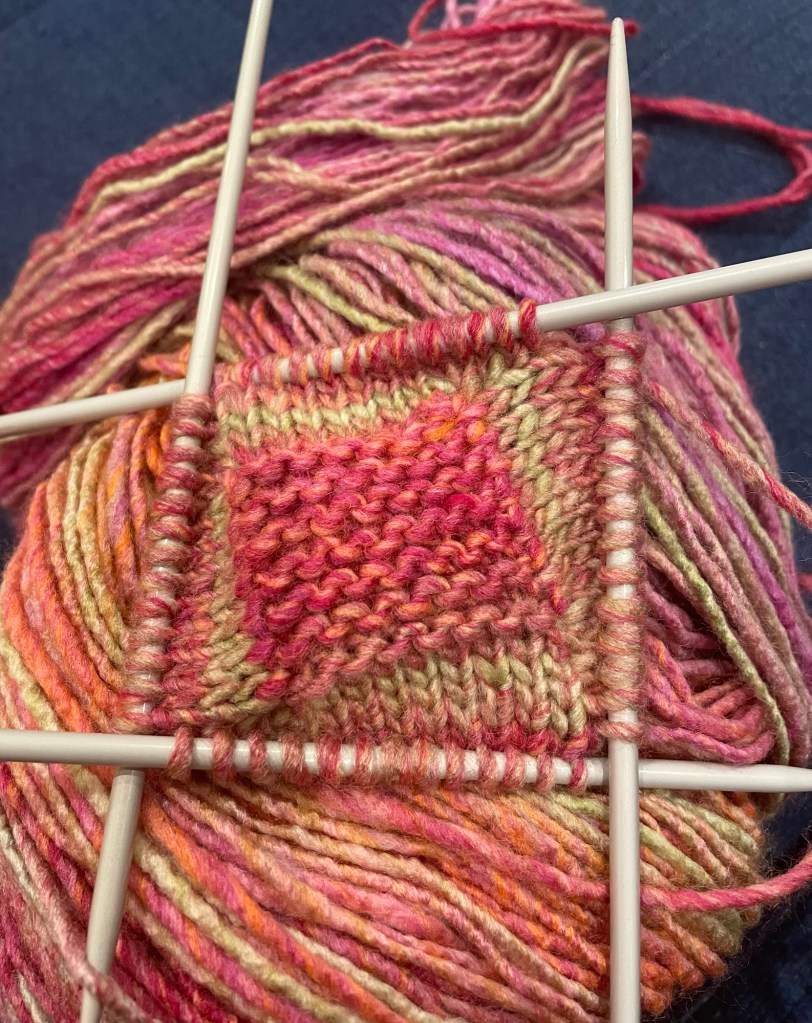
And the beginning of a new project. This little knit is a trial piece … can I knit a square by starting with a 4 cm centre and pick up stitches at each corner every round?
It’s working so far, though not yet looking particulrly tidy at the corners. I like how the patterning seems to be twisting. I haven’t worked out yet why it’s doing that.
When I imagined it the sides growing from the centre were straight. It’s possible that something totally different will eventuate if/when I knit a square all in purl. Wild times ahead.
A reflection … I love the mystery of this kind of shot. Then a bit of framing and cutting and voila … a meaningful and metaphoric intersection.
I’ve been having to prep all week for a medical ‘procedure’ on Tuesday coming and it’s played havoc with my nerves. Meaning it’s played havoc with my routines, with writing, any reading except the sort of thing I can get engrossed in and forget that the consensual world exists.
To that end have thrown myself into the Broken Earth Trilogy by N K Jemisin. Have read Parts one and Two so far, and they are every bit as good as I’ve been told. Will be re-reading them as Number Three had to be ordered in. More on them in the goodness of time.
I had six weeks to prepare my mind for this thing, so did nothing until a week and a couple of days ago, then started with writing out the whole deal in long hand in my health diary and making lists. working of the lists now.
This morning the hospital called. Was I going to do an online pre admission form? Something I had completely forgotten. Not anywhere on my lists. So did that, now going shopping. Again.
It’s ridiculous how much stuff we need for this sort of thing.
The weird thing about the prep … for me … was that I couldn’t get started until I had my clothes sorted for travelling there and back. I’m not any kind of dress-up person, most of my clothes are old and worn.
So when a hospital says ‘loose and comfortable clothes’ they’re talking about the rags I wear at home. So it was only after I had one of my clothes try-outs with all my clothes endingin a pile on the bed, and finally deciding to wear my one and only rarely worn skirt, a tshirt and a longsleeved shirt and hanging them ready …
only then could I start to think about any dietary difficulties I might have with the prescribed diet, the fact I had to drop off my antihistamine a week ago and have my nose leaking and my skin allergies popping and so on.
Does anybody even sell plain gelatine these days? Haven’t found any.
A mob of ibis, native to Australia and now more commonly known as ‘bin chickens’ hard at work on the little grassed area between the new access road and the still existing but now little used path. Little used because all it leads to is the paddock.
The little grass where the ibis are feeding is the lowest place at the base of a long slope. Water flows here both through the soil and over the grass, and from the diligent work of the birds, I gather that plenty of worms also live here.
I heard—haven’t fact-checked it yet—that ibis beaks are going through a speedy evolution turning from turned under tips to scoop food from mud, to straight tips that can pick up food from hard surfaces.
My painting of the week is nowhere near done. Credible mountains, white snow, a melting glacier and refections in the lake at the base are the objectives, so far anyway.
An unusual start has made several of the objectives quite hard to achieve. While painting with water colours paper towels and or paper tissues are vital for mopping up spills or too much water/paint.
So you get patterns on these used scraps that are too good to just throw. I glued a bunch of such in my A4 art notes book, using some 50% acrylic varnish I happened to have standing around.
When thoroughly dry, I started painting. I used gouache for the snow and will probably regret that. Could’ve used water colour ground. Some parts of the reflections are looking good. Everything in the foreground needs greying down.
The long steep rocky slope into the water is of course a wrong reflection, can’t be helped. By me, anyway. The boulder and its reflection need toning down a bit but the way the water ripples just there … I like very much!
Doing this painting I’m reminded again that keeping a scrap of paper to dab on all the colours I’m using, for a record, would’ve been a good idea. But I forgot. Never mind, I shall wing it.
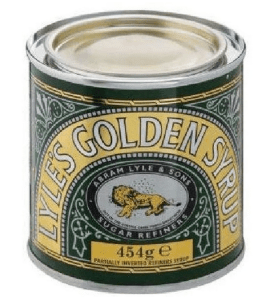
Although this isn’t the brand of golden syrup I know from my teen years in Australia, the tin is the same design. The rim is to stop drips similar to a paint can. Used as a receptacle to drink from, it needs a hole in the rim, or you’ll be spilling it both sides of your mouth.
This photo is not a double exposure, but a reflection looking into a kitchen window curtained with insect screening with the reflections of trees and shrubs behind the photographer. However I did it. An effective, if mysterious, image symbolizing Claire’s and Nalbo’s shed in their tea-tree forest. But lol, the vegetation nothing like tea-tree foliage.




 Rita de Heer