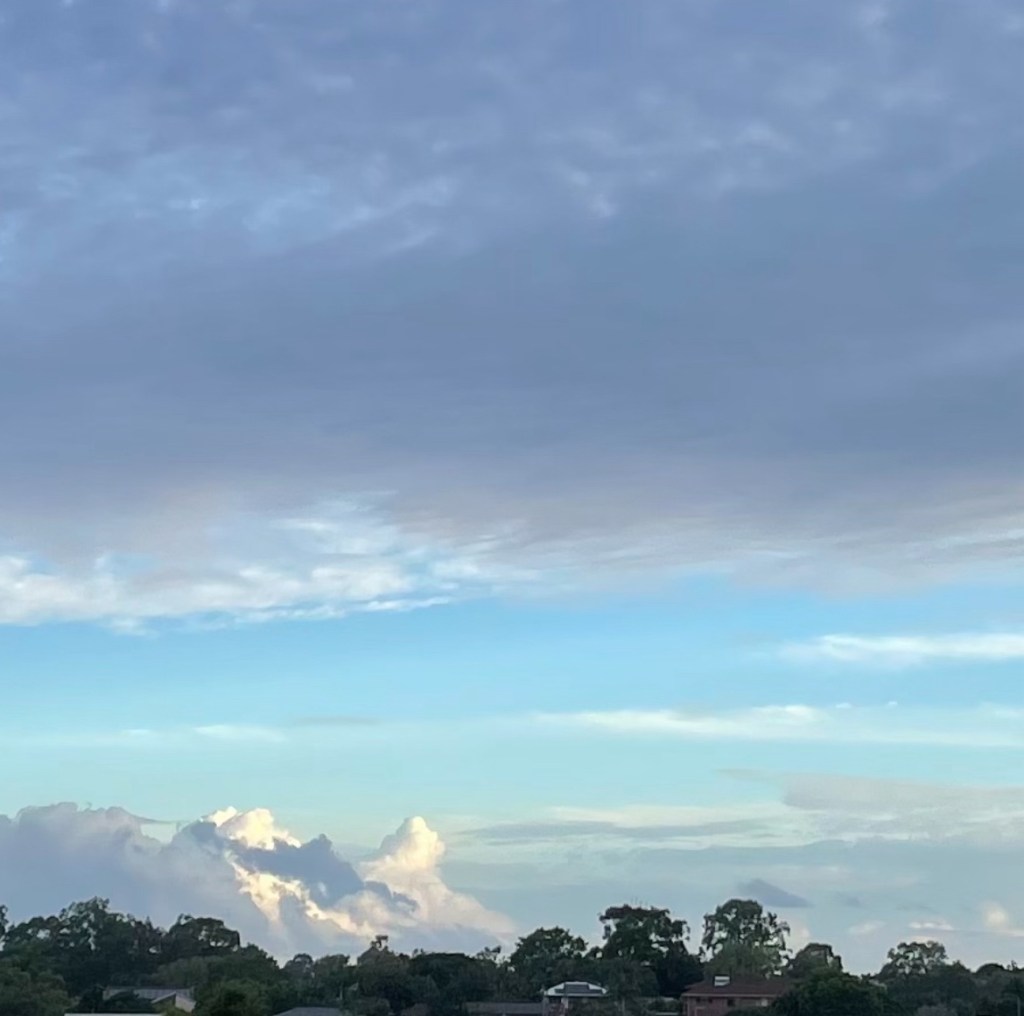
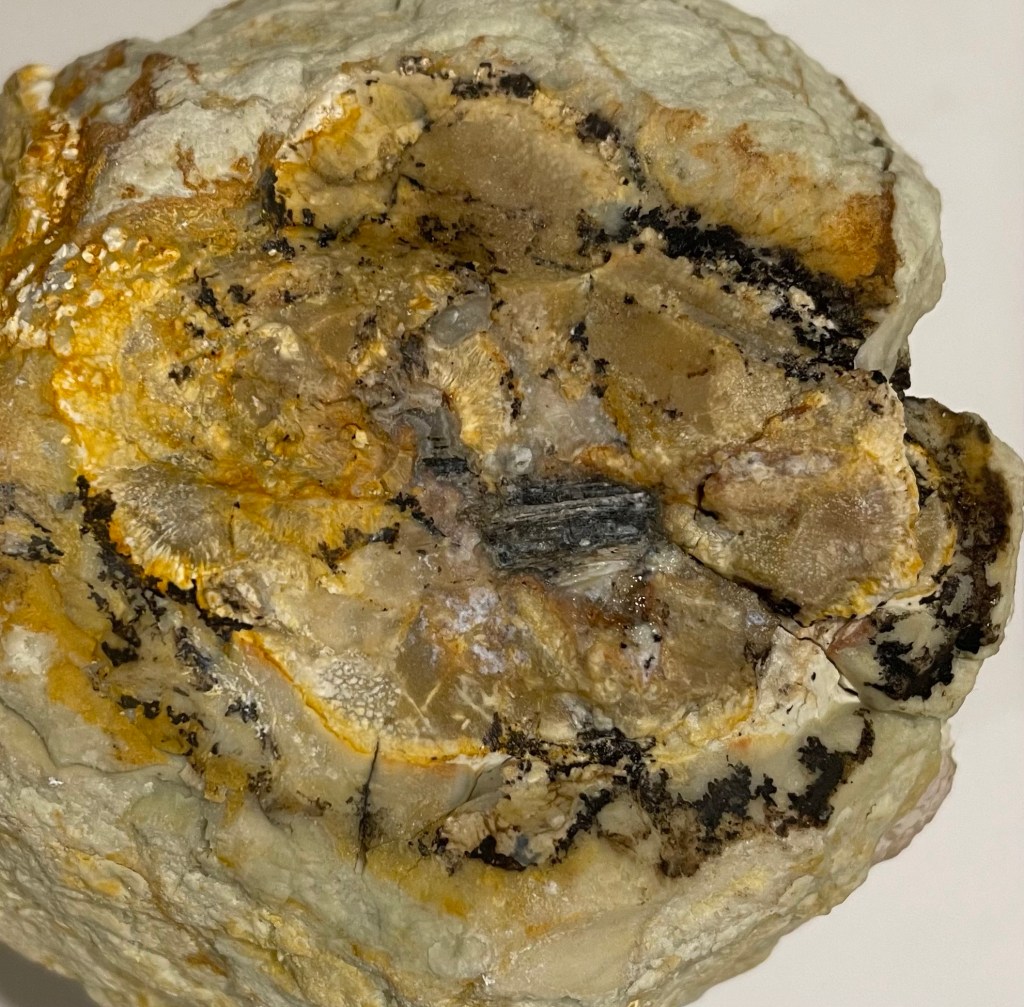
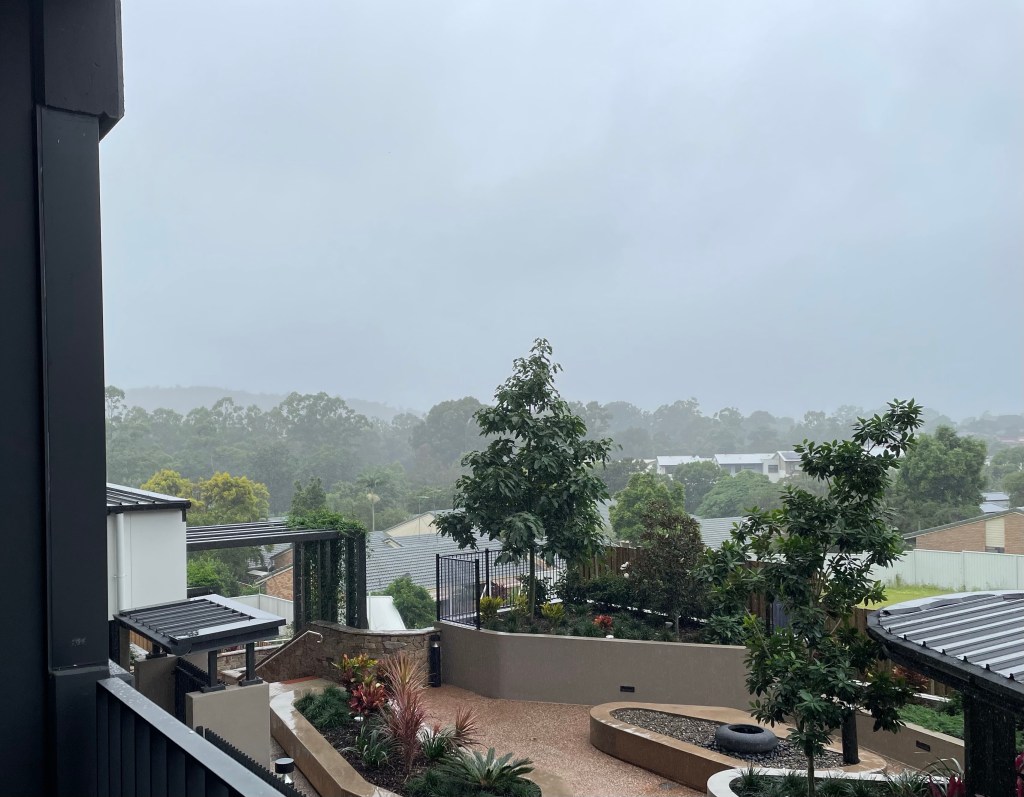
3 realities. The everyday consensual. The Eleven Islands. The future.
Author: Rita de Heer
Writing is what I do. What I think about. What I meditate on. What I dream up. Listen to. Imagine. Sometimes I sleep. Sometimes I eat. And I walk. Pull out environmental weeds. There are a thousand more things I do, though writing comes into a fair few of those things too.
Trish modelling the new stairs to her rooftop vege patch
Stairs became an ongoing experiment the minute Bosley discovered how ridiculously out of scale the ‘proper’ one is.
He had Drew illustrate the problem with the regular one …
Drew, trialling a regular tread height stair mock-up with treads three plates high. Since he couldn’t get his leg up far enough to reach the next step …… the crew decided on treads two plates high rather than three
Delving Yardbarker’s post about Place on their blog Faded Houses Green, started me thinking about what place has meant to me over the years, and how that affects my story making.
My best childhood places and events resonate in me with bursts of color. My first clear self-remembered memory is of the upturned faces of golden dandelion flowers starring the flooded and frozen grassland where my father took me and my little brothers ice skating. I was about six-years-old and had ‘proper’ child-sized skates. My brothers had flat, double-edged pieces of Meccano strapped under their shoes.
Much further on in the same year there were the glory of dahlias in a three-brick high garden bed in the backyard. A riot of pinks, plum red, orange, and golds that pronged into my eyes and heart so that I was rarely aware of the voracious pigeons sharing the backyard, quarreling over the feed scattered over the patio.
The master bedroom was curtained with a pink-orange tinted cotton. When the afternoon sun shone through, the room glowed red-gold, and I loved to be there then. Roundabout when I turned seven, my mother said that I wasn’t to hover at the bedroom door and make a nuisance of myself. She’d loaned the bedroom to a pair of unmarried teenagers expecting twins, and life became grey and ordinary for a while. Grey skies. Grey streets, red-grey brick houses. Seven dried up leaves on the sapling outside the front door.
One autumn we camped at a place called ‘Ommen’ where golden chanterelle mushrooms grew in the pine and beech forests nearby. My mother took us mushroom hunting and to find the little triangular brown beechnuts that fit exactly between my first three finger tips. Fried together on the primus camp-stove, these ‘fruits of the forest’ made dinner that night a feast.
And so I find that most of my clearest, earliest, visual memories of places are to do with warm vibrant colors. Being given my first orange when I was about eight years old, what a delicious thrill that was. I kept it for days in a special tin under my bed, to take it out and drink in its glory. Hot golden potato fries deliciously fragrant with mayonnaise that we sometimes had from a particular shop in De Haag on the way home from a long trip.
My first Lego set, the size of a packet of cigarettes, that had enough red bricks in it to build a little house, and that because I received it as a going-away present, I will always associate with the ship we traveled on to Indonesia.
Of course there were more colors. Skies of washed-out blue, steel grey or unbroken cloud. The North Sea, when I saw it, was usually also steel grey. River boats were brown or slick grey with rain and river water. The Hoogovens (steelworks) had a tall chimney belching out yellow-grey. Shades of green did not particularly impress me in those childhood days. The saddest book I ever read had covers of dark green leather.
When I look back on those years, it seems now that most people then kept their vibrant colors for indoors. Traditionalists had their rich red Persian rugs as table covers—after a meal they swept crumbs from them using a special stoffer-en-blikje, (dustpan and brush), with brass handles. Needle-worked scatter cushions and cross-stitched wall hangings brightened cosy living rooms. Highly polished brass planters and vases reflected firelight and old fashioned oil lamps.
Experiment with watercolor paint and starburst foil
My region SEQ (South East Queensland) is doing a backyard wildlife count. Everyone joining counts and records the wildlife they see in a five kilometer diameter circle of where they are living.
Which is extremely lucky because I suspect that ‘my backyard’ is regularly sprayed with insecticides. I’ve only been here for five minutes … have to see how it all works first. But, so, there are quite a few parks in the 5 kilomter circle.
Found this in the garage. Dead. It’s an Evening Brown (Melanitis leda)
Whatever day of the week they fall, there’s no time between going to work—adult ‘kids’, —going to school and daycare—grandkids—and me unpacking, to celebrate birthdays.
So about 11.15 I get a text. “We’re on our way.”
About fifteen minutes later all four of them tramp in carrying stuff. H with small sealed plastic bag with water in it. A mystery.
L with a small bag of a granular substance. Huh? K with a small plastic bottle and my white bucket. I didn’t even see these to begin with.
Because then B came in with a ceramic plant pot that had the drainage hole epoxied over.
Ahh! The key to it all.
Assembling it all, water was fetched, de-chlorinated, granular pebbles poured and laid and sculpted by H and L, B fetched ‘the swamp’ from the carpark—a crate of water plants I’d asked him to keep for me—and we transferred the plants from it into their new home.
Last, the fish!
Pacific Blue Eyes, H proudly told me.
Back in the days that I had a bathtub frog pond I’d yearned for Pacific Blue Eyes. I must’ve talked them up, because both B and H remembered, they are the fish that eat mosquito larva, but do not eat frog spawn.
Back then, Cyclone Yaasi took out the Townsville breeding facility that supplied petshops.
So, finally, Pacific Blue Eyes. Though I will need to run to the shops later to fetch fish flake as no mosquitos and no larva.
The section of park to the east of the place where I live doesn’t have a name but is part of the Bulimba Creek Catchment.
Took a walk in there yesterday. Interesting. The recent floods left piles of wood round the base of surviving trees and a sea of ground hugging greenery.
Bulimba Creek under there somewhere
I saw two lomandra plants and the eucalypts in the distance look healthy.
All else is exotic.
Ironically, native street trees are doing very well.
Flowering acacia (maybe) with a blue quandong behind it.
Up in the upper left. Ever met one of these? First time for me too.
I had so much to learn, move, stack, shift and unpack that I just looked it for the whole first seven days I was here, while I learned the other three.
Me saying ‘learned’ up there instead of ‘learnt’ will tell you the learning is ongoing. My control over the downlight switches needs fine tuning.
The fan, which is great, is controlled contrarily. 3 = 1 and 1 = 3 if that makes any sense. Thankfully, all three fans in the house work the same.
The left hand light ‘switch’ works the far four downlights in the living area. The right hand switch operates the nearer downlights.
The kitchen has its own array of controls.
The HUSH button?
I asked Deb from Admin when she came yesterday to talk me through my first monthly EEVI check. Which is a whole other kettle of fish.
The HUSH button will calm the fire alarm, say you set it off accidentally burning your toast, or something.