
10. Drew is Blue
Dan decided Wendy should drive, Jackie next to her in the cab. He’d ride in the back, ready to jump out should a bit of shovel work be needed.
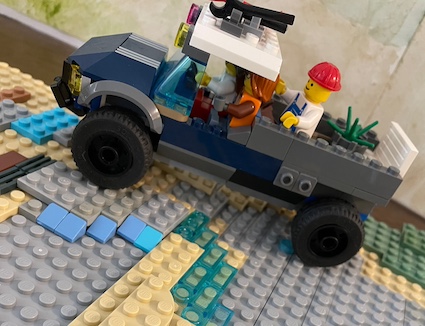
“I don’t mind,” Wendy said. “All this rain we’ve been having probably livened up the mud a bit.”
“Hey there! That’s Drew’s van in the track!” Dan said. “Wait here, ladies. I’ll go warn him that we’re coming by!”
“That van looks like it’s stuck in the mud,” Jackie said. “I know the feeling well.”

Wendy slid from the driver’s seat. “He’s going to need help.” She rounded the front of the truck. “We don’t have your winch do we, Dan?”
“Does look like a winch job, Drew,” Dan said, agreeing with her.
“What?! You’ll pull me all the way to the site?” Drew said aggrieved. “I’m doing just fine. I got this far!”
“You need a four-wheel drive,” Dan said.
“We churned the track up plenty coming this far,” Jackie said.
“You need friends,” Wendy said. “I don’t agree that you should get pulled all the way to the site.”

“Then what?” Drew said. “You’ll recall I’m still sleeping on a swag in a dinghy?”
“Yep. My plan will get you up off the ground,” Wendy said.
All three looked at her.
“Okay no, let’s take a step back. Dan, you fetch the winch. With Jackie out of his face, Jed will probably help you install. Jackie, you make us all a cuppa.” She looked at Drew. “You still got the fixings?”
“Yeah. Sure. Go ahead.” He set his shovel aside. “Much as I’d like to toss it.”
Wendy laughed. “Be my guest. Only be prepared to fetch it back. In my experience, winching will need a ton of shovel-work as well, only faster.”
“Why I never asked. I like the slow way, you know? So what will I be doing?” Drew said suspiciously.
“You mean what will we be doing?” Wendy said. “You and me? Having a chat without the usual interruptions?”
“A serious life changing chat?” Drew said lightly.
“Yes,” Wendy said. “You probably can call it that.”
“Go weed the island?” he pointed.
She chuckled. “Here. Have some seedlings. We’ll start planting the island while we talk.”
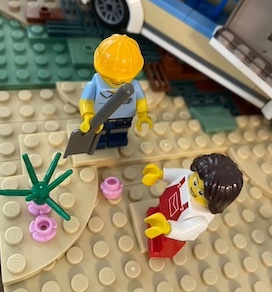
At the end of their ‘little’ talk, Drew smiled and laughed while Wendy and Jackie and he drank their coffee, waiting for Dan.
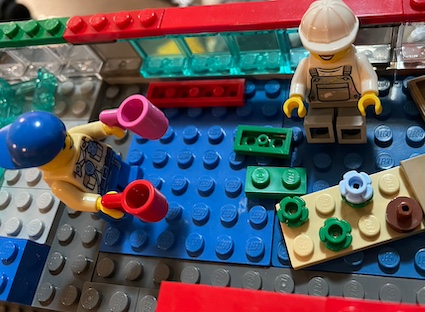
“I hear him,” Jackie said. “Quick. I can just rinse these mugs.”
Dan arrived without the winch. “Boss said they couldn’t miss it. I’ve got a tow rope. It’ll be good, don’t worry.” He started knotting it at the front of the van.
“Not here!” Drew said. “We need it at the back. Need you to drag this thing out backwards.” He smacked the back of the van like he smacked a beast on its rump. “It’s goodbye and good times had while we were together.”
Dan shook his head. “What’s got into him?”
“I don’t know,” Jackie said.
Wendy just grinned.
Right. Bit of Wendy magic. Don’t break the spell! Dan concentrated on towing Drew’s van back to the roadside lay-over where Drew had camped for so long.






 Rita de Heer