
I’m pretty amazed at finding this image … these are exactly the sort of thing I imagined for the buggy’s attachments to the cables.
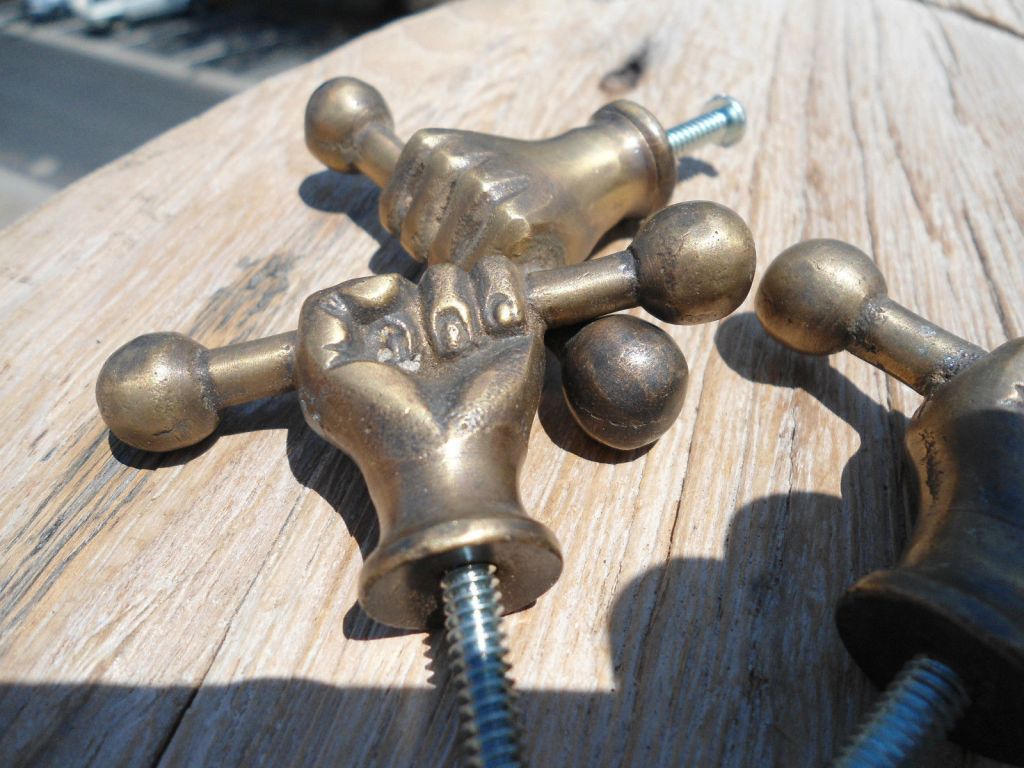
I’m pretty amazed at finding this image … these are exactly the sort of thing I imagined for the buggy’s attachments to the cables.
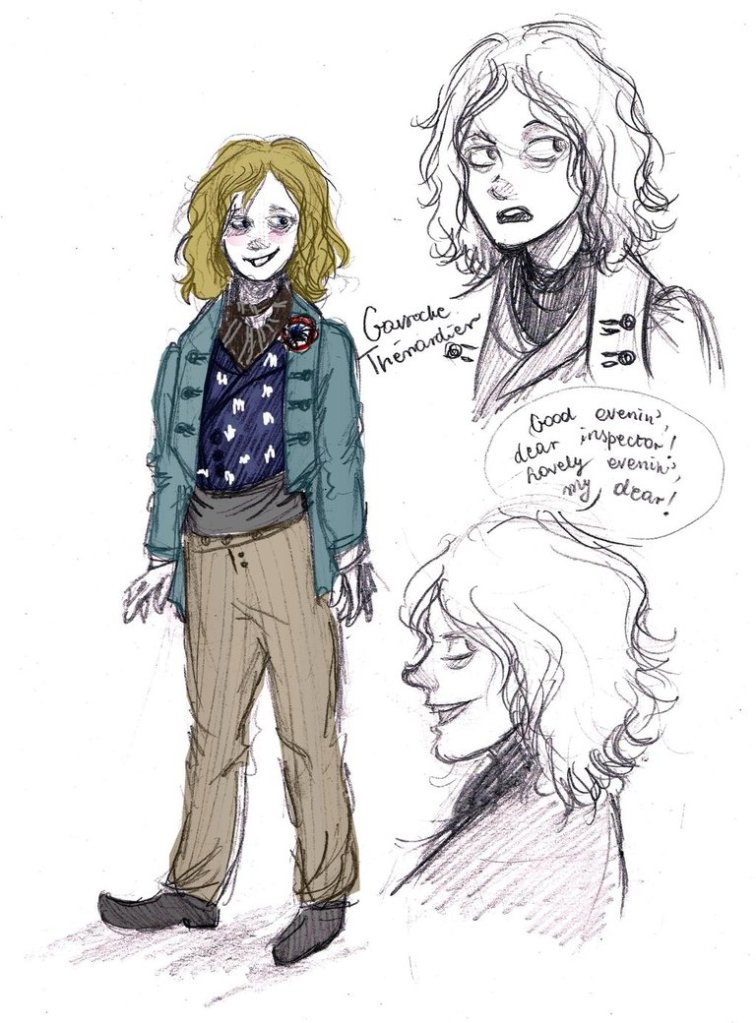
An image that I sourced from Deviant Art about five years ago. I don’t remember any more how I got it. Whether I downloaded it, for example. street_urchin_by_xxignisxx-d66m7xi
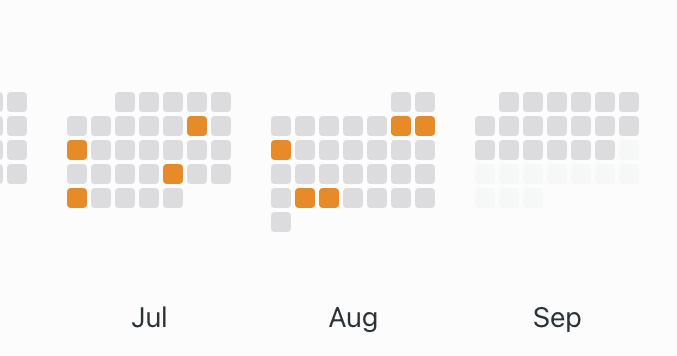
A month of non-activity on this blog is the result of a one week physical and mental prep followed by an anesthetic, and then three weeks to recover. Anesthetics get harder to recover from the older I am.
Seldom have I felt like doing less, and any kind of creating has been like pulling a dropped stitch from the bottom of a twenty-rows piece of knitting.
I have painted a bit, but not on my main project. I have knitted, pulled the thing undone at least twice before realizing I couldn’t produce anything intricate so better settle for something well-practiced. I have not written other than in my journal, nor edited, nor done anything else in this arena.
I did achieve a staircase in Lego in the art deco style so feel good on that score. Haven’t been down to the garden for over a fortnight, and hope my fellow residents are keeping that going.
Trying to keep body and soul together is taking all my energy at the moment. Like, doing the washing, the dishes, cooking myself three meals a day.
Not even reading that much. It’s a mystery what I do all day.
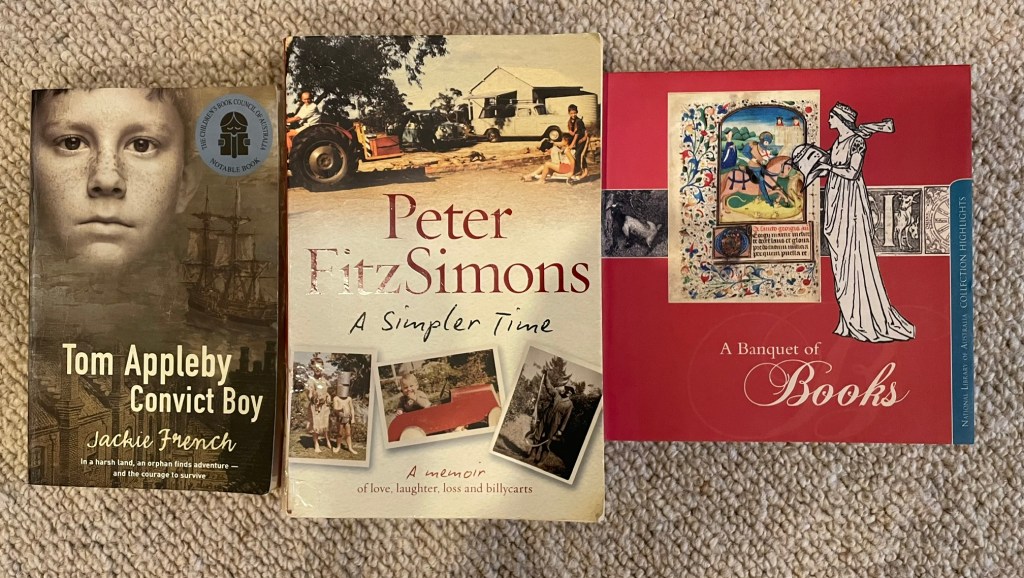
Lol, I should be writing Part 17 by now. I knew when I started this project I’d have a hard time keeping up with the Reports. And, the longer I leave the reports, the harder it becomes remembering what I thought about the books. Well, here goes.
Book 48 … Tom Appleby, Convict Boy, by Jackie French, published in 2004 by Angus & Robertson, an imprint of Harper Collins Publishers.
When I read a book aimed at young readers, I’m often in the mode where I’m reading aloud. Asking myself whether it ‘sounds’ like an interesting read for both the adult reader and the young listener. And Tom Appleby sounds pretty good to my inner ear so I will be able to recommend it.
Although the main character starts off being only eight years old, his life will be so foreign to modern children being read to, there’s no flavor of childishness. And once the ships reach Port Jackson, Tom grows up a bit. He has to, in a community where hunger is the primary concern, and stealing food is not an option for him.
Tom is chosen by a sergeant in the marines for company for the sergeant’s son. The boys learn the skills necessary to survive together.
Though I’m not sure about the fact that they meet an old aboriginal lady who shows and teaches them native foods. Not sure how that would strike a modern Indigenous reader/listener.
Thirty years ago, Jackie French was a favorite source for read-aloud books. Seems like she could do with a revival. And the book has indeed passed on to its next home–the-adult-reader-and-young-listener combo.
Book 49 … A Simpler Time: a memoir of love, laughter, loss and billycarts, by Peter FitzSimons, published in 2010 by Harper Collins Publishers.
I’m glad FitzSimons called his book a memoir himself, saves me have to ponder once again about the differences between autobiography and memoir.
I saved this book from the dumpster because it’s set in the late 1950s and 1960s, and because the kids in it grew up at Peats Ridge, only about 39 kilometres by road and shorter as crows would fly from the suburb where my sisters and brothers and I were growing up in those exact years.
There’s even a possibility we might have met them at one or other time as we all would’ve traveled the same train services. Maybe in the school holidays or once we all graduated from our various high schools.
There were plenty of interesting comparisons and likenesses. The FitzSimon kids lived on a two-hundred-acre farm, where their parents had settled after WW2, to grow oranges, tomatoes and zucchinis. A seven days a week job.
We de Heer kids lived on a half-acre block carved out of the same kind of sandstone that supported Peats Ridge, covered with the same kind of bush that vegetated Peats Ridge. The de Heer father, also being a seven days a week man, chose to build our house himself on weekends, and after he got home from 12 hour days getting-there, working, and-getting-back.
There were five of them, there were six of us. The FitzSimons kids were boarders at Knox Grammar for Boys and Abbotsleigh Girls High. Both of them ‘flash’ private schools in the understanding of newbie immigrant kids like us. We went to state day schools like Asquith Girls High School and Asquith Boys High School, though one of my brothers managed to get a scholarship to attend James Ruse High School at Carlingford.
Our state primary schools, theirs and ours, would’ve been run by the same state education department, though theirs was a country school with only two classrooms and ours may have had 4 classrooms by then.
Peats Ridge. As soon as I picked up the book, it was like I recognized it and had to read it. Thoroughly enjoyed it and will send it to one of my youngest siblings for him to read.
Book 50 … A Banquet of Books: A Collection of Highlights, published in 2007 by the National Library of Australia.
I hardly know where I got this book. Must’ve been in the collection of secondhand books I saved from the dumpster. A job lot as they say. But an interesting little book, and about books you’d never ordinarily would see, hidden as they are among the collections or in the National Library’s acreage of store rooms.
After a brief intro, it is divided into three sections: Homegrown Historical Treasures; Masterpieces from Abroad; and Works of Art.
The introduction starts with one of the smallest books in the world—so small in fact that I don’t see how it could’ve been made—measuring 2.1 mm by 2.4 mm made in Germany in 2002. The largest book in the collection also gets a mention … Birds of America by James Audubon, 1785-1851. It’s a double elephant folio.
Part one’s Homegrown Historical Treasures includes a catalogue of fabrics (bark cloth or tapa) collected during the three voyages of Captain Cook. Part two, Masterpieces from Abroad, has a Book of Hours, and a leaf from the Gutenberg Bible and about fifteen more. Part three, Works of Art, contains Lionel Lindsay’s Twenty-One Woodcuts and Ann Muir’s Harvesting of Colour, from the 1990s, among a couple of dozen of historical maps, biographies, paintings by Gould, John Lewin, and other artists. I was amazed at the treasures the National Library has hidden away in its collections. Well worth visiting.
Book 51 … The Black Book by Ian Rankin, first published by Orion Books in 1993. This edition published in 1994 in the UK, but then printed in Australia in 2005 as far as I can make out.
I returned this to the library only yesterday and all I recall of it is that it’s the fifth in the Inspector Rebus series. Here a few more details by Wikipedia.
“The Black Book is a 1993 crime novel by Ian Rankin, [1][2] It is the first book to feature Siobhan Clarke, and the first one in which Morris Gerald Cafferty appears as a main character. It is also the first book in which Rebus is based at St Leonards police station.”
Neither awful nor fantastic, it delivered me a few hours of uninterrupted relaxation/reading when the stress of the previous couple of days meant my delayed fatigue forced me to rest up.

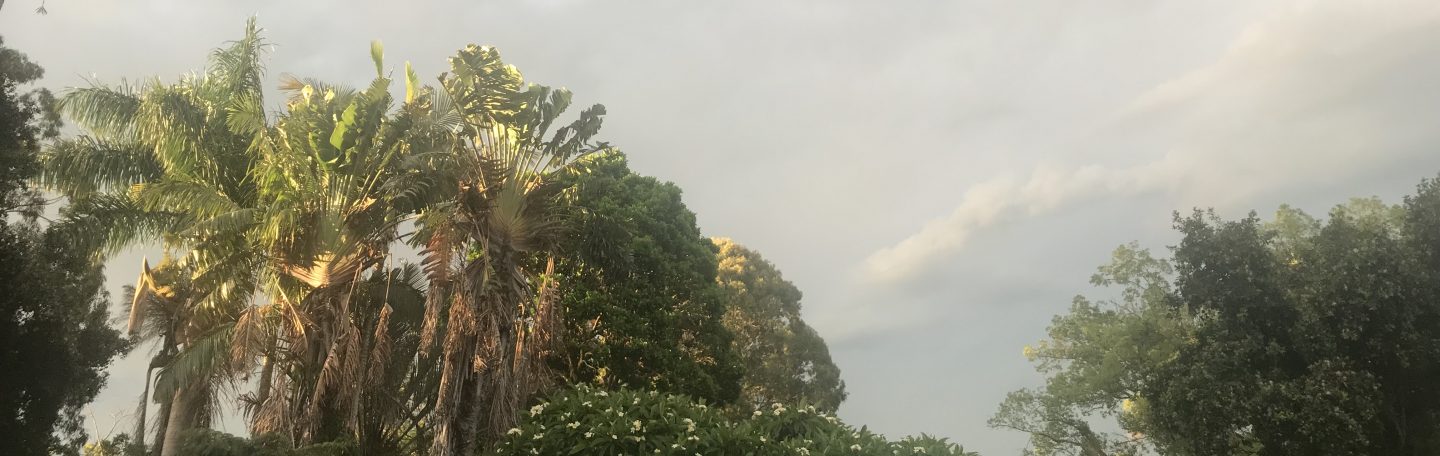
This is a screenshot, possibly from a photo by Paul Smith of an amazing-looking unnatural-looking sky. Correct me if I’m wrong. Anyone?
Finally signed up to a newspaper and even paying my way. The Guardian has Tim Winton writing on account of the ‘outrage’ of climate warming being done to us, and mincing no words at all. I’m happy to read the real story!
So I’m glad that the Volkskrant, the Dutch outlet I was trying to subscribe to, just didn’t want to know me. Their site is run totally by machine. Without any human input, it feels like, and if the prospective subscriber asks something different to the usual, there is just no possibility to step off the beaten track.
And finally, there’s nowhere to put my Australian money since I don’t have an IBAN, don’t know what an IBAN is, and moreover my bank in Australia does not deal in IBANs. Up to now I have had no problem paying anywhere in the world by the usual international means. Must be, the Volkskrant wants only want sheeple.
From the few bits that I did read, I gather that Dutch–or should I say Nederlands–is being Anglified hand-over-fist. I saw a ton of words taken straight out of English that, where and if necessary, had Dutch pre and post fixes, and verb endings applied. Gescoort? Offeren. Privacy. Spark.
Other than that tendency, there is the Dutch practice of pasting long trains of words together to describe new concepts … onderhandelingstafel, for example, in an article to do with trade sanctions. Don’t ask, I have no idea. Vermogensbeheerder is another mysterious concept.
Is this merely a Dutch version of journalese is what I want to know? Do ordinary Dutch people speak this language?
The equivalent but opposite tendency in English seems to be to split up compound words and I admit to a tendency to put hyphens between words that read as though they are trying to belong together. Like hand-over-fist a few lines above.
Rise & Inspire’s post, shared below, made me realize the cat that had to move on from my care, the cat that I named Moggy, that entertained us on these pages with her antics and that finally attacked me one too many times, that same cat is now sitting on a threshold between me and me ever again taking care of another pet animal.
Ownership doesn’t come into it. An animal will either allow you to take care of it or it won’t. Moggy was at my place for about two years, and she never trusted me. Maggy, on the other hand was with me for about nine years. She trusted me enough to take showers with me.
A very high level of trust, you’ll agree, here grooming herself after such an event.
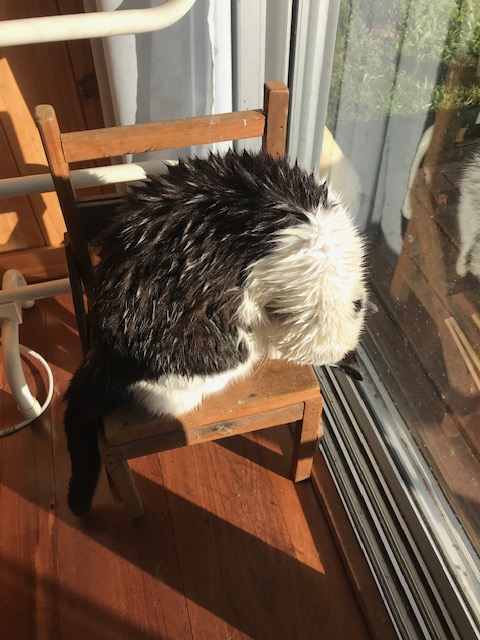
Over the years, I’ve had six cat companions, starting with a cat inherited with a student house; a dog, Jesse; a lamb called Tuki, that grew too big for the backyard and went on to become a lawn mower at the local sewage works; 6 black hens and one fluffy white hen; and various pythons and bluetongue lizard guests.
So, now, Moggy is out there sitting on the the-old-woman-caring-or-not-for-a-pet-threshold. Guarding against me ever trying to take another flesh and blood animal under my care. Because she is out there, prowling to and fro, just out of reach, mowling, reminding me of my failure when she thinks I’m softening and girding myself up for another go.
I wish Moggy would go off and have an adventure with the Hand of God, Maggie’s alter ego.


