Earth Fall, 5

Campfire

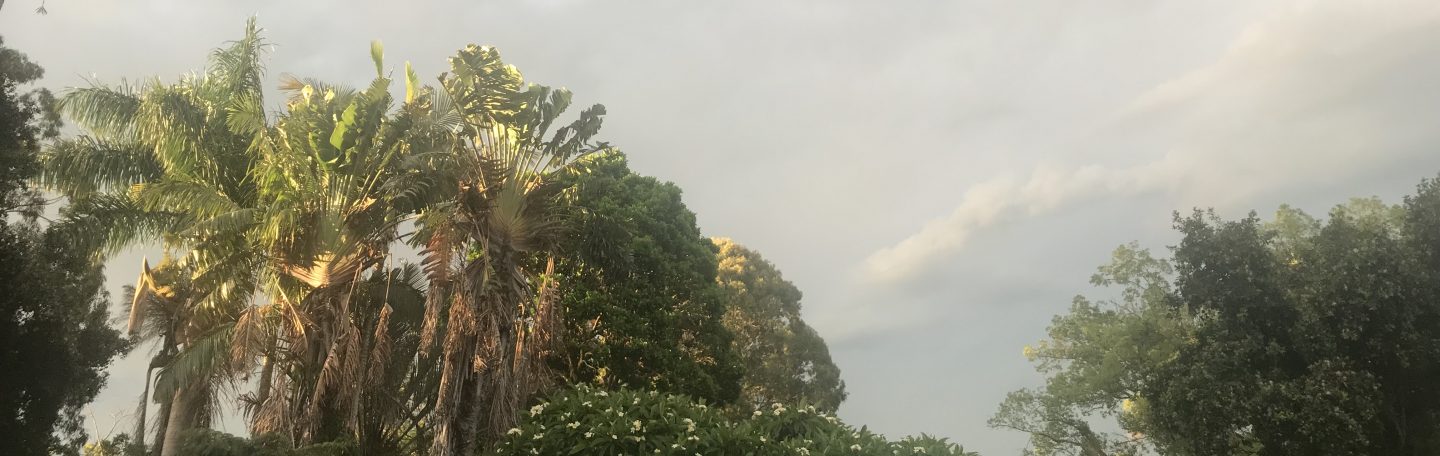
This image is a cut from an original photo by whom I don’t know from somewhere in the gloaming beside the virtual ocean where we go surfing when we open our laptops, switch on our desktops or scroll up our mobile phones. Cell phones to you, too.

It might even be a cut from an image from iStock where I purchased maybe thirty useful shots a few years back. I don’t remember. The fire is the important thing, though. As in, Claire builds a fire.

Cat Diary 37

We have started training. Apparently it’s a good idea for me to learn the meaning of some human words. This week we’re tackling “Sit” and “Come”.

When the old woman says “Sit” she means for me to go sit beside her on the couch. When I get there, I usually get some kibbles on her lap table, which is the board she lays over her knees to eat her dinner off or use her laptop on. “Sit” is easy.

“Come” is hard. She wants me to come right up to her feet before she puts the kibble down. When I have finished the kibble, she walks to the next place where she can perch on a chair or a bed, and says it again. “Come.”

I so don’t see the point. I’ll sit down and wait for the next kibble right where I am.

So then, next time we did “Come” I was really hungry, and it was worth my while to just follow her around the house, and be there before she even said the word. Too easy!

Probably she’ll make it hard again next time.

PS, I’m also learning to take selfies …

Earth Fall, 4

This story was written well before the no-no thing started about dogs dying in a story.

[I realize dogs are our best friends. I’ve owned a dog myself and it was a wrench to let her go when that became necessary. She was only nine years old when she developed a brain tumor and could not be saved.]

In this story one of the dogs briefly dies. So, I guess, you can take this as a spoiler alert.

Cat Diary 36

I’ve started learning to put my head in things to get the kibbles out. For a long time I didn’t like my whiskers to be bent backward. Now, because I know there’ll be a kibble at the end of my hunt, I can bear it.

It proves that we cats are just as good at delayed gratification as humans are, don’t you think?

The old woman craftily loads kibbles into my catnip pillow case … I swear I don’t know when … in between me looking here there and elsewhere it must be.

When I walk by the bundled up pillow case and I can smell a kibble or two, that’s when I pounce.

I can even get the kibbles out of a crumpled piece of paper now. We had a lady visiting last night. She said, “My place is much tidier than yours!”

The old woman laughed. She said, “Tthat shouldn’t be hard!“

It’s true that the whole floor is busy with activities, is that necessarily untidy?

Just having a nap here, waiting for my bedtime kibble storm. Once I’ve eaten them, it’s time for me to encourage the old woman to go to bed. She complains it’s too early, but when I bite her ankle she soon goes.

Night times I play with the toys the old woman has put on shelves. Which I can reach now, except for my bird. It lives high on a bookshelf.

The old woman says I can have it back when she’s taken its voicebox out. Apparently there’s a nasty battery in there that’d kill me if I chewed on it.

Indigo

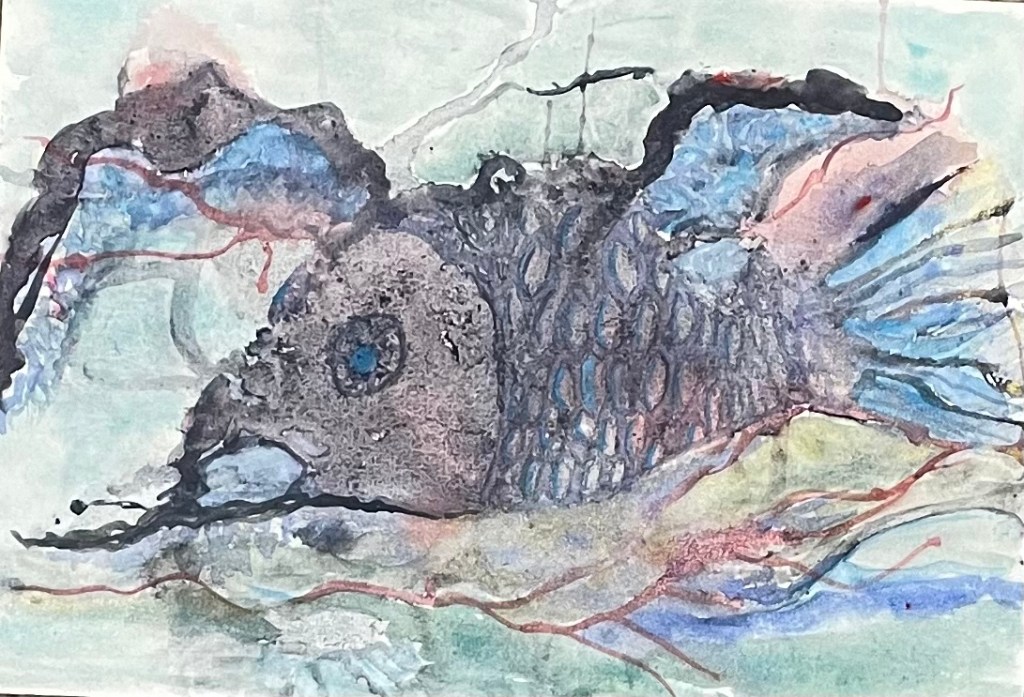
Indigo by Daniel Smith is probably the watercolor I use most, and is also my favorite to experiment with … if that makes sense. This indigo is so finely milled it’s the smoothest paint I own and yet it’s capable of amazing gymnastics. Below a wet layer of indigo over a failed experiment (which is represented by the pink tones) with phthalo blue dropped into it.

The Indigo, being smooth and light (weight) allows granulars such as sodalite, and heavier colors such as phthalo blue, to react spectacularly.

Getting shades by dipping a brush into water after a stroke, indigo will last longer than any other color and make the most wonderful greys.

One of the newsletters I subscribe to is Books on Books curated by Robert Bolick (https://books-on-books.com/2025/03/23/books-on-books-collection-louis-luthi/)

This month’s letter took me to a link (https://sites.rutgers.edu/motley-emblem/indigo/) where I discovered some interesting facts about indigo. So far about 200 plants have been discovered that yield indigo, and it is nearly the only color-fast natural plant dye.

The two hundred plants is quite a surprise as the Japanese indigo cloths are quite expensive and said to be made from a rare plant. Several cultures in Africa also use indigo to dye cloths. I’m wondering now whether the original processes make these products expensive, there is bound to be a lot of processing necessary to make dyes from scratch.

My only experience extracting color from wild plant materials to dye wool, has been using lichens to make a dark red, and that was by boiling the lichen and the yarn in ammonia, then setting the pot in a sunny place for three weeks, stirring it daily. Reading how indigo was/is extracted, it seems a similar process.

Following the links, the Brooklyn Museum webpage presented me with Catherine McKinley’s article on indigo’s influence in women’s culture, where Indigo is spoke of as rare … as in “the rare, refulgent dye and the commodities spun from it.” from (https://www.brooklynmuseum.org/stories uncovering_a_womens_history_of_african_indigo) while Bloomsbury Press offered me one of McKinley’s resulting books https://www.bloomsbury.com/us/indigo-9781608195886/

In Asia, cultures such as Javanese batiks and ikats, and Japanese aizome also made indigo famous.

Nowadays ammonia is one of my no-no’s in that I’m allergic to everything with chlorine in it, though fabric dyeing has remained one of my interests. It was only a small hop to watercolor painting on cotton paper.

Wikipedia’s article on indigo, in particular growing the plant https://en.wikipedia.org/wiki/Indigofera_tinctoria