Paragraphs by Chronically Rising on Facebook are in Blue. My comments and notes in black. I’ve posted up Chronically Rising’s whole article and commented on just the areas that affect me. All of this is bad enough, but note that quite a few maladies shelter under the ME/CFS umbrella.
POTS, OI, Fibromyalgia and PD are the four co-morbidities I believe the term is, that are part of my ME/CFS experience. And finally–I discovered the other day–Lymphoma (DLBCL in my case) is a known possible cancer that can result from ME/CFS.

 Why People with Myalgic Encephalomyelitis (ME) Can’t or Struggle to Work
Describing the impossibility of employment while living with Myalgic Encephalomyelitis (ME) is like trying to explain the weight of gravity to someone floating in space. ME is a complex neurological, fluctuating and disabling disease that strips patients of the basic building blocks of daily function—let alone the capacity for work.
We are not lazy. We are not unmotivated. We are not “wasting potential.” Most of us were hardworking, driven and passionate about our careers—until ME took our ability to participate in life as we knew it.
I’m lucky now that I’m of an age where it’s fine not to be working for a living. When I first became ill in 1997, and could no longer work, I had those words thrown at me. People told me I seemed unmotivated (a careers counselor), bone-lazy (a relative), and wasting my potential (a person at one of the schools where I had worked). A heart specialist told me I was the worst hypochondriac he’d met before he physically, hand gripping my arm, walked me out the door.
Centrelink aka the dole office at the time, was the worst place where we all would’ve had to spend useless hours trying to get an allowance just to be able to continue to lay on the couch eking out our days till we became well enough to work.
Getting back to work never happened, though I did become well enough to study part time and when that ran out, to start volunteering. While I was studying, my son was getting through his high schooling. We lived on his Family Allowance and my Austudy. We had a vegetable garden and poultry for eggs, and a lot of help from my parents who were farming nearby.
The Disability Reality
Only about 25% of ME patients are able to work—and many of those can only manage limited, flexible work. At the other end, 25% of people with ME are housebound or completely bedridden. Even those with “mild” ME—often invisible to others—have lost at least 50% of their pre-illness functionality.
These numbers don’t represent a lack of trying. They reflect the physical, neurological and immunological collapse that defines ME.
My level of illness can best be described as mild to medium. Even in the days when I was at my sickest, I managed get up from the couch a couple of times a day to hang up a bit of washing, cook a meal or fetched a loaf of bread. My son was twelve the year I became ill, and as a result learnt a lot of life skills.
The year that followed my son finishing High School and leaving home, and my Austudy Grant running out, was one of my worst years. I had no income for months at the time and Centrelink kept harping about me starting work. For I don’t remember how many months I was forced to attend 10 useless job interviews a fortnight.
The stress built until I was forced back onto the couch, sicker than before. You might think I got an allowance then, but I don’t recall that I could even drag myself to the office. I don’t remember what I lived on that year.
Finally back on my feet in 2004, I was able to go volunteering. Ten hours a fortnight in a volunteer-job were enough to get me an allowance. It got me outside where I could get away from all the bad smells that plagued me, working Landcare sites, learning the difference between weeds and plants–I bet I pulled a few thousand camphor laurel seedlings in my time–meeting people, learning all about catching cane toads and a host of other things, with plenty of rest between sessions. A second job had me making up the remaining needed hours at home, setting up a database for the local museum.
Post-Exertional Malaise (PEM): The Wall We Can’t Push Through
PEM is the hallmark symptom of ME. It’s a delayed and disproportionate worsening of symptoms following even minimal physical, mental or emotional exertion. The crash usually comes 12 to 72 hours later and can last for days, weeks, months or longer. For many, the decline can be permanent.
A 2019 international survey by Holtzman et al. (n=1,534) found that 67% of people with ME reported never recovering from a crash caused by PEM.
This is not just tiredness. It’s post-exertional physiological injury. In ME, pushing through doesn’t make you stronger—it risks permanent harm. Even minimal overexertion can trigger a level of collapse some never recover from. It’s why exercise is not just unhelpful but dangerous for us.
PEM … I get mine 48 hours after the event, usually in the early morning. If I overdid it badly, I’ll get heart arrhythmia (a scary thing in itself) and I’ll be too tired to get out of bed. In the days that I had or have a cat, I will eventually get out of bed. Have breakfast, feed the animal and sink down on the couch. Or I’ll have a nap sitting up after breakfast.
Having a shower, washing my hair, and an all-over moisturizing cannot all be done on the same day. If I’m washing my hair, I’ll just moisturize my face and chest. The moisturizing is needed to prevent the skin allergies that lead to discoid eczema, the second itchiest skin condition I have yet experienced, that is kept at bay with diligent moisturizing.
Preventing PEM, I need to pace. I check my health app on my mobile. If I walked a lot the previous two days, I will stay at home. Like today when I’m typing this instead of going for a walk. Yesterday and the day before, I walked 2970 and 3477 steps, so today I must limit myself to 2000 steps or thereabouts or regret it tomorrow.
Fluctuating Illness
ME is a disease of instability. You might see us online one day or hear our voice in a short conversation—but not see the collapse that follows. ME doesn’t run on a schedule. Our capacity to function can change dramatically from hour to hour and day to day.
This fluctuation makes it impossible to meet deadlines, maintain fixed schedules or commit to the consistency required for employment.
The events I’ve planned to go to, that I haven’t been able to make it to, are a list as long as my arm or longer. I used to believe in miracles, but no more. I’ll never be able to make it to a LEGO exhibition, or LEGO shop. Music festivals. GOMA. Art exhibitions. Painting au plein air. Plays and dramatic productions. Films.
All gone. All too hard. Too much energy needed. Too much stress.
Cognitive Dysfunction
“Brain fog” sounds gentle—ME cognitive dysfunction is not. It’s memory failure, language loss, confusion, sensory overload and an inability to process basic information. Reading, speaking, typing and even thinking become physically exhausting. This is not surprising, as your brain uses 20% of your body’s energy.
Workplaces depend on sustained attention, memory and executive function. These are precisely the areas ME can impair most.
Very fortunately for me, I don’t believe I’ve suffered much of this element. I can still work on this blog, I can still write my fictions, work out an intricate knitting pattern, and read … both fiction and nonfiction. This year I’m studying Depth Psychology. Last year I studied Dream Interpretation.
Energy Production Failure
ME is not a condition of low motivation or simple fatigue—it’s a dysfunction in cellular energy metabolism. Our bodies cannot produce or sustain energy normally, and rest doesn’t replenish it. No sleep, vacation or energy drink will undo what this illness does at the cellular level.
Days when I don’t have energy seem to pass without my input. I don’t understand where they go sometimes. Afterward I have no idea what I did. And I don’t any longer drink alcohol, coffee or chocolate. I don’t smoke anything. And never now eat sugar, chocolate or any other consciousness-altering substances.
My diet is plain. I eat GF DF LowFODMAP and no sugar other than three small serves of fruit per day. What’s left you say? 37 vegetables, 7 fruits, chicken, fish, eggs, and tofu, nuts and seeds, corn chips. Water to drink.
Physical Limits
Even basic physical tasks like sitting upright, getting dressed or speaking can exceed our energy envelope. Some of us need to lie down most of the day. Others collapse after simple movements. The physical exertion of daily life alone is already overwhelming—working on top of that is physiologically impossible for many.
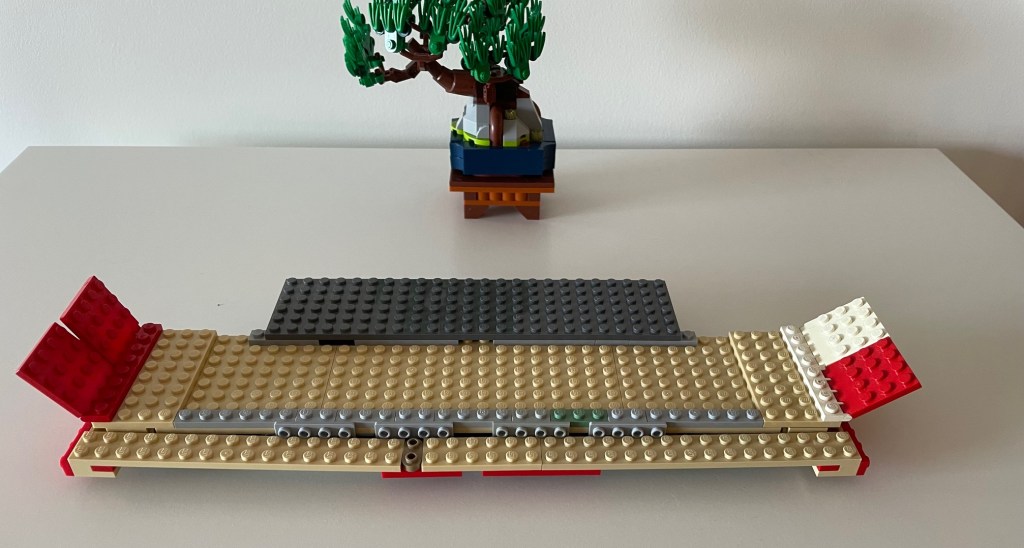
I haven’t sat upright for more then ten minutes at the time for years. I’m working right now at this post with a board across my knees, my laptop on that and typing from a forty-five degree angle sitting back against my couch cushions. I paint, read, eat, knit at this angle. I’ll sit up for brief periods to build with my LEGO and have my breakfast, and entertain the odd visitor.
Light Sensitivity
Many of us can’t tolerate typical workplace lighting. Fluorescent bulbs, sunlight and screen glare can cause migraines, vertigo, visual disturbance or neurological crashes. Some live in darkened rooms permanently.
I have been worse in this department. But I have been able to fine tune my apartment, and I’m not dependent on others. Same as with noise sensitivities. The unit I live in is so well insulated there’s hardly any noise.
Noise Sensitivity
Normal sound levels can be unbearable. Our nervous systems can’t filter noise like healthy ones can. A ringing phone, conversation or keyboard clatter can feel like an assault—leading to overstimulation, pain, confusion or even seizures.
Chemical Sensitivities
Many ME patients have Multiple Chemical Sensitivities (MCS) or Mast Cell Activation Syndrome (MCAS). Scents, cleaning chemicals, laundry products and colognes—everyday in most workspaces—can cause immune reactions, neurological symptoms or even anaphylaxis.
I have a LOT! off chemical sensitivities, intolerances and allergies. There are foods I can’t eat, stuff I can’t to breathe, stuff I can’t wear. Sometimes the sensitivities are affected by all aspects of an entity. For example, I can’t wear wool next to my skin, can’t knit with woollen yarn, can’t eat mutton or any part of sheep, and can’t use lanolin cream. What happens is I get a rash. Inside your mouth a rash is no fun at all.
Other times it’s just one aspect that is a bother. I can’t eat the brown skin on almonds, walnuts and brazil nuts, cinnamon bark, or similar substance. I get a sore throat. I usually don’t bother to reel off the whole lot when people in, for example, the medical profession, ask me for my allergies, or ask me to fill in a form with a tiny box for allergies.
I tell them only the half dozen or so that will impact them. These days, living where I now do–in a retirement village–my biggest regret is that I can’t attend most of the functions due to an overload of perfume and fragrances. It seems to me that as people get older they wear more and more, possibly because they’re losing the fine-tuning of their sense of smell, or they’re so over-dosed on scents that they need to wear more and more just to be able to smell them.
Sometimes, just getting into the elevator means getting into a cloud of scent left there by a previous rider. Usually I hold my breath, easy to do because I live on Level 2.
Since my last crash, I’ve become even more sensitive to chlorine. Bleach and swimming pools have been a bane for years, but now also I have to brush my teeth with water (most tooth pastes contain chlorine.) The list goes on.
Immunocompromised Status
A mild virus for a coworker can be a months-long crash or permanent relapse for some of us. Many people with ME do not have robust immune systems. Shared office spaces, public transport and even remote jobs that require appointments or outings pose a major health risk for some of us.
I still wear a mask in public places like shopping centres, public transport and busy streets. Or if there’s a lot of coughing nearby. Or if I need to squeeze into an elevator with fourteen others after a fire evacuation practice. Or. Or. Or.
Accessibility
Even without wheelchairs, ME patients may need full recline, silence, minimal light, temperature control and no chemical exposure to function. These aren’t preferences—they’re survival requirements. Most workplaces aren’t designed to meet these needs.
The Emotional and Social Weight
We live with an invisible illness in a world that demands visible proof. If we appear “well” for a moment, it’s assumed we’re fine. If we look ill, it’s assumed we’re not trying hard enough.
We’re judged for not working and also judged for trying to do anything at all. The emotional toll of constantly justifying your illness to society, friends and the system is devastating.
We Are Not “Just Tired”
ME is not burnout. It is not depression. It is not laziness. It is a multi-system neurological disease that profoundly disables us.
Some of us write, create or advocate when able—not because we’re well enough to work, but because these brief, careful expressions are a lifeline. They do not reflect our baseline or our capacity to sustain employment.
Sometimes, survival means stepping away from everything you love just to make it to the next day.
To Employers, Friends and Society
If someone with ME says they can’t work, believe them. We are not giving up. We are protecting what little function we have left. Even when we look okay, what you don’t see is the days or weeks of suffering that follow minimal exertion.
We’re not lazy
We’re not “burned out”
We’re physiologically ill
We’re doing our best to survive
 All rights reserved by Chronically Rising.
That’s all. I’m trying to live the best life I can.






 Rita de Heer
